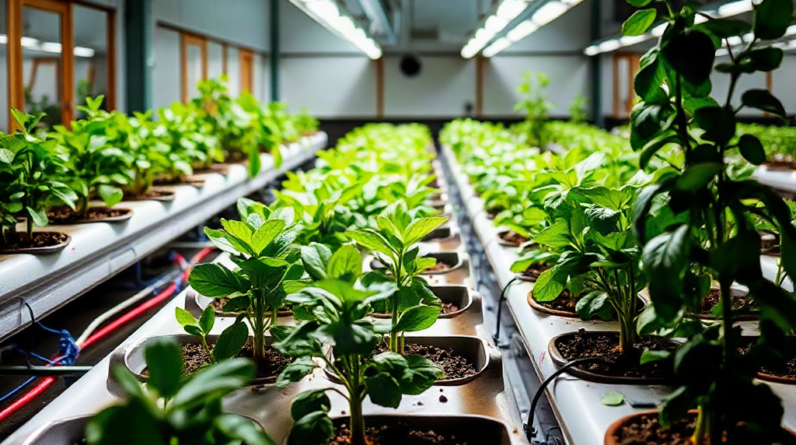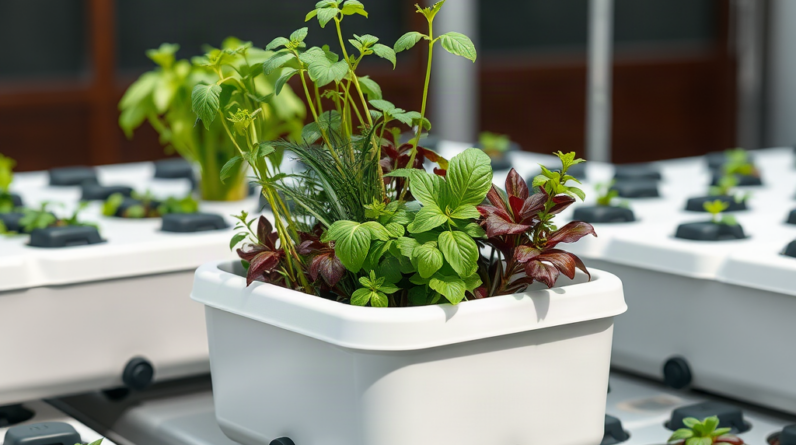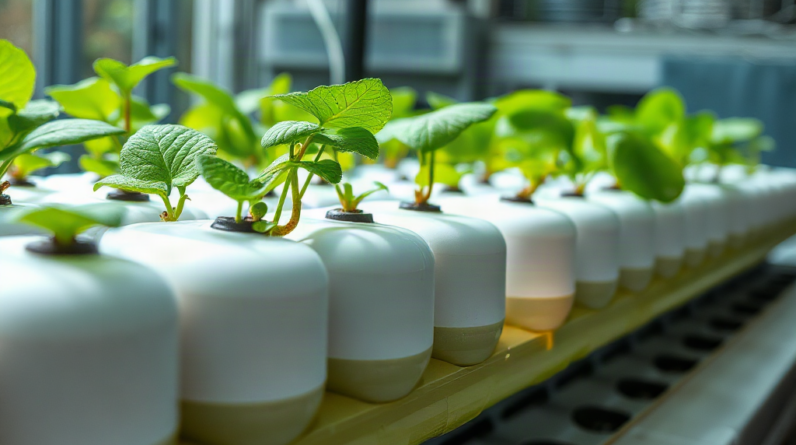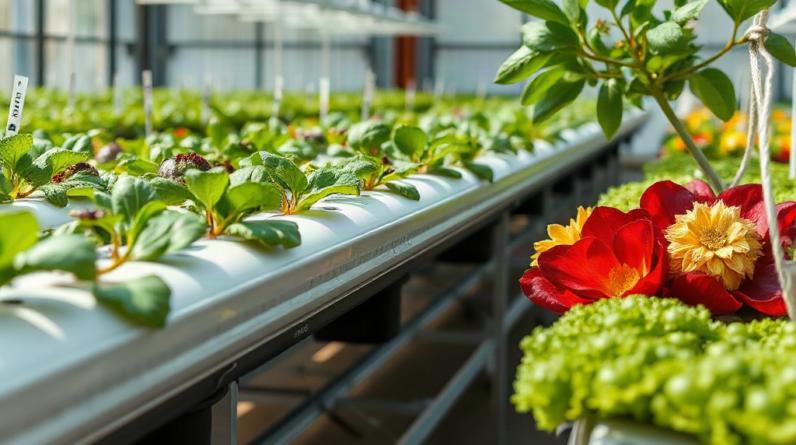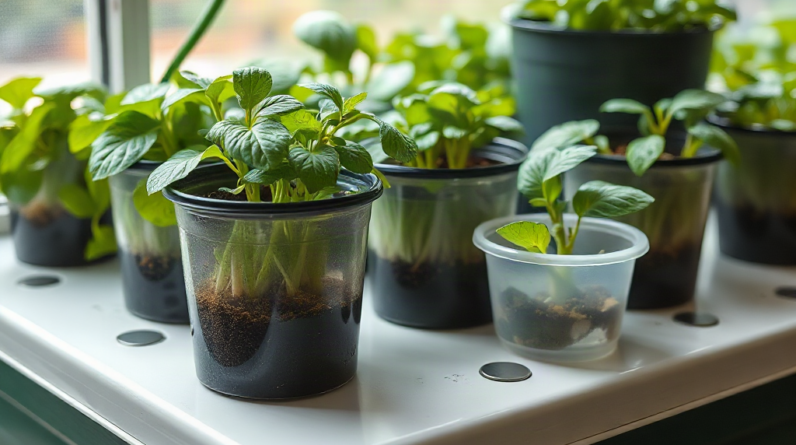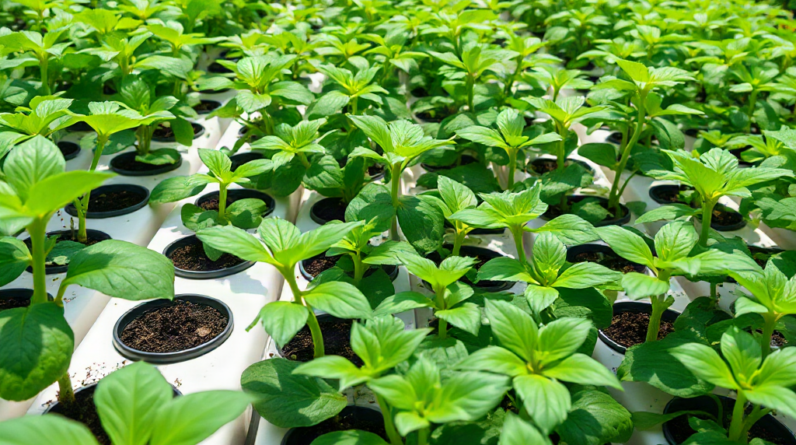
Avoid over-crowding in hydroponic gardens by spacing plants according to their mature canopy, limiting each site to one appropriately sized plant, and pruning growth before leaves overlap. Crowded foliage blocks light, restricts airflow, raises humidity around leaves, and makes nutrient or pest problems harder to detect. Map the system before planting, account for root and vine expansion, and leave access to reservoirs, channels, and emitters. Fast-growing tomatoes, cucumbers, and basil usually need more room than compact lettuce or herbs, so a uniform spacing rule can waste capacity or create competition. Thin weak seedlings early and move vigorous plants rather than waiting for a tangled canopy.
Why Crowding Reduces Hydroponic Performance
Over-crowding changes the growing environment around each plant, even when the reservoir chemistry appears correct. Leaves shade one another, air movement slows inside the canopy, and the upper growth can intercept light that would otherwise reach lower leaves. Roots may also occupy the same channel or container space, making it harder to inspect root color, flow paths, and signs of stress.
The most visible consequence is usually uneven growth. A lettuce plant on the outside of a dense raft may receive more light than one pressed between mature neighbors. In a vertical tower, upper plants can shade lower sites, while long roots may partially obstruct channels or alter water movement. A plant that looks healthy at first can become difficult to harvest and inspect once its leaves spread into adjacent sites.
Humidity trapped between overlapping leaves creates another management problem. Slow-drying foliage can make leaf disease more likely, although crowding alone does not prove that a disease will develop. It also creates hiding places for insects and makes early damage harder to see. A grower who waits for yellowing or severe wilting may discover that the practical problem is not simply nutrition; it is poor access and a congested canopy.
Uniform spacing is not automatically good spacing. Six compact butterhead lettuces may fit where two mature tomato plants would not, while basil can fill gaps quickly despite starting as a small seedling. Use how to avoid over-crowding in hydroponic gardens as a planning question rather than a fixed distance: how large will the plant become, where will its leaves go, and can you still reach the equipment?
Plan Plant Spacing Around Mature Growth
Spacing should be based on the plant at harvest size, not on the size of the plug at transplanting. Seedlings can look comfortably separated while their mature leaves, stems, and roots eventually occupy neighboring space. Write the crop name beside each site and estimate its expected canopy width, height, and training direction before filling every opening.
Compact leafy greens are often easier to place densely because they have short production cycles and a relatively predictable shape. Even then, crowding becomes a problem when leaves overlap heavily before harvest or when the raft leaves no room for inspection. Fruiting crops demand a different layout. Tomatoes and cucumbers typically need vertical support and a deliberate path for stems, while peppers may remain more compact but still cast substantial shade as they mature.
A useful arrangement separates crops by growth habit. Put low, short-cycle greens where they will not sit beneath a vigorous vine. Group plants with similar height and harvest timing when the system allows it. Mixing a sprawling cucumber beside a small lettuce head may appear efficient on planting day, but the cucumber can soon occupy the light and access needed by the lettuce.
System design limits the available choices. In a nutrient film technique channel, placing sites too close together can cause leaves to overlap and roots to interfere with inspection points. In a deep-water culture raft, unused holes can provide valuable air space and access; filling them all may increase output briefly but reduce visibility and airflow. A smaller number of vigorous plants may outperform a full system of stressed plants because each crop receives more usable light and is easier to maintain.
- Measure the mature canopy, not the seedling plug.
- Reserve room for trellis lines, harvest access, and equipment checks.
- Leave unused sites when a crop has an unusually broad or fast-growing canopy.
- Separate tall, sprawling, and compact crops before planting.
Do not treat a manufacturer’s hole spacing as a guarantee that every crop belongs in every hole. Hardware spacing describes the structure; crop spacing depends on cultivar, lighting, pruning, and the intended harvest size.
Use Pruning, Training, And Staggered Placement
Plant spacing prevents crowding at the design stage, but pruning and training manage the canopy after growth accelerates. Removing damaged leaves, redirecting stems, and tying vines to a support can keep productive growth within its assigned area. The objective is not to strip a plant bare. Excessive pruning can expose tender tissue to strong light or remove leaves that still contribute energy to growth.
For tomatoes and cucumbers, train the main stem upward rather than allowing it to spill across neighboring plants. Check ties regularly because stems thicken and can become constricted. Basil and other leafy herbs may benefit from harvesting the growing tips, which encourages a more manageable branching pattern when done at an appropriate stage. Lettuce generally needs less structural training, but removing outer leaves during harvest can prevent neighboring heads from becoming locked together.
Staggered planting can also reduce the appearance and effects of crowding. If a system holds several batches of lettuce, planting them on different dates prevents every plant from reaching maximum size at once. The tradeoff is more complicated nutrient and harvest scheduling. A single-age crop is simpler to manage, while staggered growth makes better use of space but requires accurate records.
Spacing and pruning work together. A plant placed too close to its neighbor may remain manageable under bright, uniform light with frequent training, but the same arrangement can fail in a dimmer corner where stems stretch toward the fixture. Conversely, generous spacing will not solve a canopy that is never tied, thinned, or harvested. Inspect the direction of new growth each week and correct stems while they are flexible.
A common mistake is waiting until leaves have formed a solid wall before taking action. At that stage, removing enough material may create a sudden imbalance, and trapped pests or damaged leaves may already be difficult to reach. Small, repeated adjustments are usually easier than one aggressive cut. If two plants are competing for the same support line or light zone, move one when possible instead of forcing both into a confined space.
Monitor Airflow, Roots, And Access
A properly spaced canopy should allow air to move through the leaves and give the grower a clear route to inspect each plant. Airflow does not mean blasting foliage continuously with a strong fan. It means avoiding stagnant pockets, especially beneath dense leaves and around corners of enclosed grow areas. Watch for leaves that remain wet after irrigation or condensation and for branches that press against one another without drying.
Fan placement matters because a fan aimed at one exposed plant may leave the center of a dense group still. Use gentle circulation that reaches the interior without causing persistent leaf flutter or drying one side of the crop. As plants grow, reassess the airflow pattern; a layout that worked with seedlings may no longer work when a tomato canopy fills the upper half of the room.
Root access is equally practical. In a shared reservoir, roots from neighboring plants can become intertwined, obscuring inspection and complicating removal of a diseased or failing plant. In channels and small containers, roots can restrict flow or collect around outlets. Check that water can move as designed and that each plant’s root zone can be viewed or reached without dismantling the entire garden.
Keep pathways to reservoirs, pumps, emitters, and electrical components clear. A visually full garden may be operationally over-crowded if checking pH, cleaning a filter, or removing a plant requires disturbing several others. This is a major difference between a display arrangement and a maintainable production layout. how to avoid over-crowding in hydroponic gardens includes preserving service access, not merely separating leaves.
Signs that spacing is failing include persistent interior humidity, pale lower leaves caused by shading, stems stretching toward distant light, roots crossing inspection zones, and harvests that require bending or moving several plants. Respond to the pattern rather than one symptom. More light may not fix a blocked canopy, and more nutrients will not create physical room.
A Practical Crowding Check Before It Becomes A Problem
Review the garden on a fixed schedule, such as during weekly maintenance, and judge the canopy from several angles. Look above the plants, at leaf level, and below the foliage. The top view reveals overlap; the side view reveals height competition; the lower view shows shaded leaves, poor air movement, and blocked access. Photographing the same area periodically can make gradual expansion easier to notice.
Use this short decision sequence:
- Identify the obstruction. Decide whether the problem is leaf overlap, stem direction, root interference, or blocked equipment access.
- Correct the least disruptive cause first. Harvest mature leaves, redirect a stem, or relocate a container before removing healthy growth.
- Recheck light and circulation. A plant may appear separated after pruning while still shading its neighbor or trapping moisture.
- Thin or move plants when the layout cannot recover. Keeping every seedling may cost more growth than removing a weak or poorly placed plant.
- Record the lesson. Note the cultivar, planting date, and final size so the next cycle uses a more realistic site allocation.
Prioritize crops that are growing fastest, blocking multiple plants, or preventing access to shared equipment. A small lettuce overlap may be tolerable for a short period before harvest, whereas a vine pressing against several plants can reshape the entire canopy. The best decision depends on crop value, remaining production time, and whether the system can be rearranged without damaging roots.
Do not confuse a full-looking garden with a productive one. If thinning creates open gaps, use those gaps to improve inspection and airflow rather than immediately filling them. how to avoid over-crowding in hydroponic gardens is ultimately a question of usable plant space: every crop needs enough room to receive light, exchange air, develop roots, and remain accessible through harvest.
Frequently Asked Questions
How much space does each hydroponic plant need?
It depends on mature canopy width, root volume, crop type, lighting, and training. Use the expected harvest size rather than the seedling size, and reserve access around the plant.
Can pruning fix an over-crowded hydroponic garden?
Pruning can reduce leaf overlap and redirect stems, but it cannot compensate for severely unsuitable site spacing. Remove damaged or obstructive growth gradually and move or thin plants when the layout remains congested.
Which hydroponic crops are most likely to become crowded?
Tomatoes, cucumbers, vigorous basil, and other spreading crops often outgrow fixed layouts quickly. Lettuce and compact herbs are easier to group, although dense planting can still limit airflow and access.
Should every planting site in a hydroponic system be filled?
No. Leaving sites empty may improve light distribution, airflow, root inspection, and maintenance access. Filling every opening is only useful when the selected crops can mature without excessive overlap.
How can I tell whether plants are too close together?
Look for persistent dampness, shaded lower leaves, stretched stems, blocked equipment, intertwined roots, and leaves that cannot be inspected without moving neighboring plants. These signs indicate that the layout needs thinning, training, or relocation.
Conclusion
Good hydroponic spacing is a maintenance decision as much as a planting decision. Base each site on mature canopy and root behavior, group plants with similar growth habits, and leave enough room to reach reservoirs, channels, supports, and individual leaves. Prune and train early, but do not rely on aggressive cutting to rescue a layout that was too dense from the beginning. During weekly checks, inspect the canopy from above and below, look for stagnant air or blocked roots, and thin plants that are compromising several neighbors. A garden with a few open sites can be more productive and easier to manage than one filled to capacity. Plan for the crop you expect at harvest, not the small plant you see on transplant day.