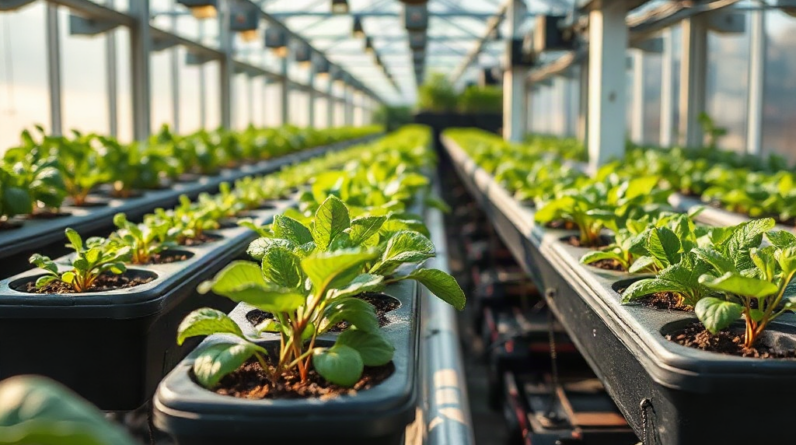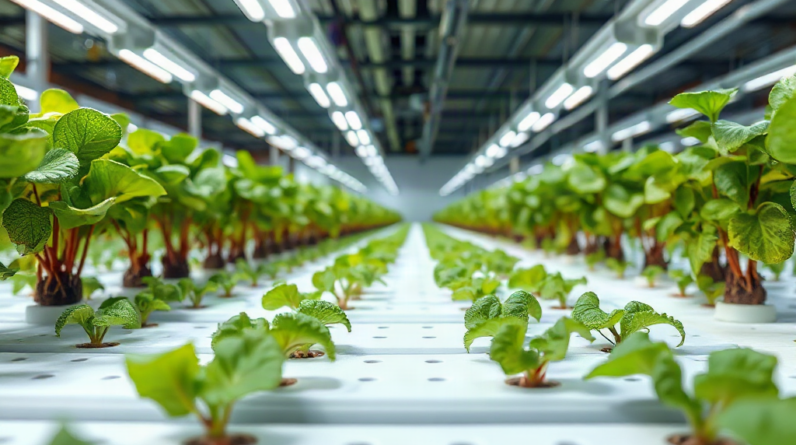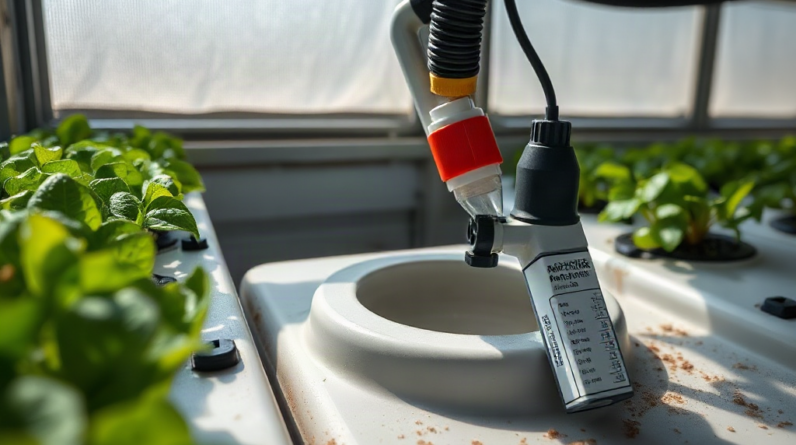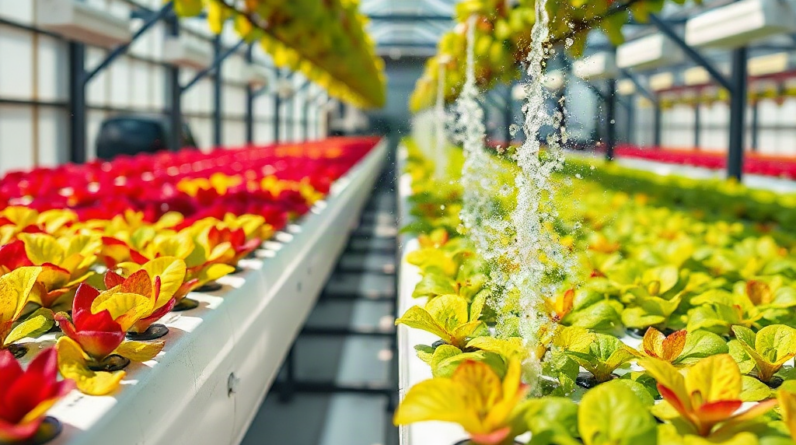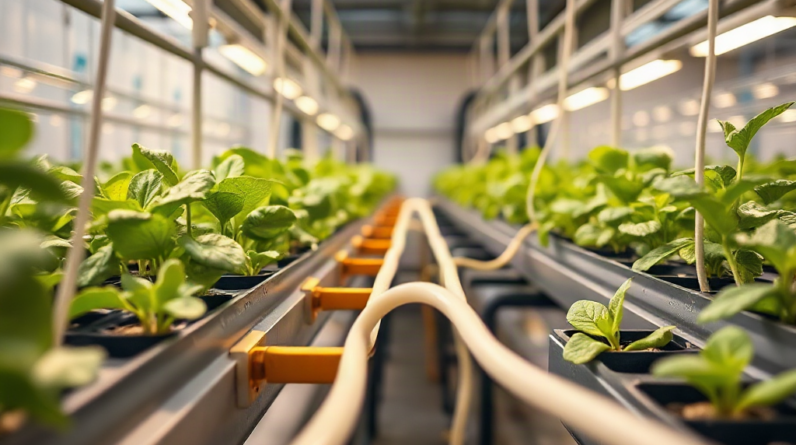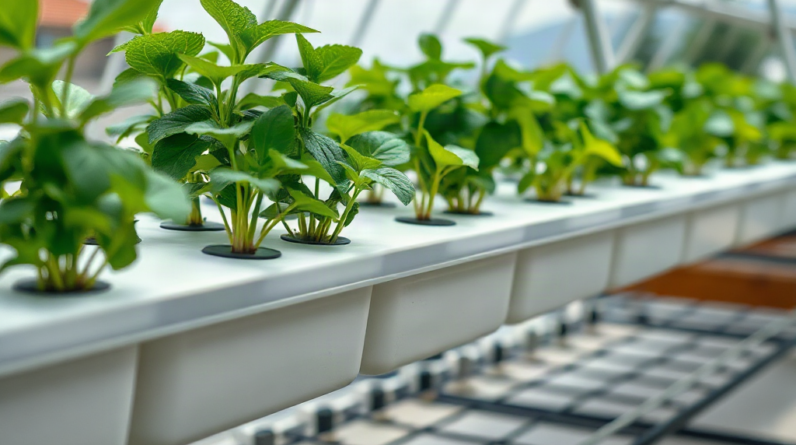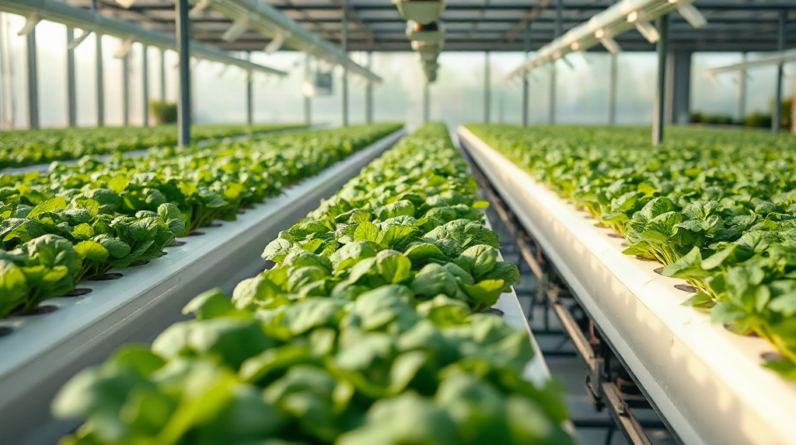
Select a hydroponic system for greens by matching the crop’s shallow roots and short harvest cycle to available space, maintenance time, budget, and desired planting density. Deep water culture suits beginners who can monitor aeration and water temperature, while nutrient film technique uses less solution and fits repeat harvests when channels remain level and clean. Ebb and flow offers flexibility for mixed greens but adds pump and timer complexity. Check reservoir access, power-failure risk, airflow, light coverage, cleaning effort, and replacement-part availability before buying.
Match the System to the Greens You Will Grow
The best system for greens depends first on the plants’ root structure, harvest style, and tolerance for drying. Loose-leaf lettuce, arugula, mizuna, spinach, kale, basil, cilantro, and similar crops generally need steady moisture, oxygen around the roots, and enough space for the canopy to expand. They do not usually require the large root volume or long support period associated with fruiting crops, so a system designed for tomatoes may waste space, energy, and growing media.
Leafy greens also reward predictable access. A grower who wants to cut outer leaves every few days may prefer individual planting sites that can be reached without dismantling the garden. Someone raising a single batch of baby greens may value a shallow tray or flood bed instead. The crop calendar matters as much as the plant list: fast turnover makes cleaning between plantings and reseeding efficiency more valuable than maximum reservoir capacity.
Deep water culture keeps plant roots in an oxygenated nutrient solution and is often a practical entry point for lettuce and herbs. It has few moving parts, but the air pump must run reliably and the reservoir needs monitoring. Nutrient film technique sends a shallow stream through sloped channels, making it attractive for dense rows of greens. Its weakness is dependence on uninterrupted flow; a blocked channel, failed pump, or poor slope can expose roots to drying.
Ebb and flow periodically floods a tray and then drains it, giving flexibility for different container sizes and media. It can work well for a mixed collection, although the pump, timer, drain fittings, and flood height require more setup attention. A vertical tower saves floor area, but its planting sites may dry unevenly or place lower plants in the shadow of upper growth. A system that looks compact on a product page may therefore be less suitable for uniform lettuce production.
Write down the greens you will actually plant, the expected harvest method, and whether you want one crop or several. That list usually narrows the field faster than comparing brand features. For more context on how to select the right hydroponic system for greens, treat crop compatibility as the first filter rather than a final detail.
Compare Hydroponic Designs by Maintenance and Risk
System selection is largely a choice about where you are willing to spend attention. Deep water culture is mechanically simple, yet the whole root zone shares one reservoir. If the water becomes too warm, excessively concentrated, or contaminated, every plant is exposed. That shared solution is easy to inspect and change, but it also means a single oversight can affect an entire raft or bucket group.
Nutrient film technique uses a smaller volume of solution and can provide an efficient arrangement for repeated lettuce plantings. The channels must remain clean, properly supported, and consistently sloped. Roots can grow into the flow path, plant debris can collect at outlets, and an incorrectly fitted return line can leave one channel wetter than another. These problems are not reasons to reject NFT; they are reasons to choose it only when you can inspect flow routinely.
A passive wick or simple reservoir system has lower equipment demands, but it may offer less control over moisture delivery as plants become larger. Ebb and flow gives a useful middle ground for growers who want containers and flexible spacing, though its moving parts create additional failure points. Compare not only normal operation but also the response to a fault. Ask how long roots could remain hydrated after a pump stops, whether a leak would reach flooring or electrical equipment, and how quickly you could obtain a replacement air stone, pump, timer, or fitting.
A beginner may reasonably favor a small deep-water unit because the plumbing is straightforward and root moisture is visible. A grower producing several trays each week may prefer NFT because channel organization and harvest access matter more than the simplest installation. Neither choice is automatically superior. The better design is the one whose failure modes you can detect early and whose routine you will actually perform.
Before purchase, simulate the weekly work: mixing solution, checking water level, inspecting roots, removing debris, cleaning surfaces, and reseeding. If a design requires awkward lifting or hidden fittings, maintenance will probably be postponed. A modest system that can be drained and sanitized without moving a full rack often outperforms a larger system that is difficult to service.
Size the Setup for Space, Light, and Harvest Rhythm
Capacity should be measured by usable plant sites under adequate light, not by the number of openings advertised. Greens need enough horizontal room for leaves to develop without trapping humid air between plants. Crowding can make harvesting awkward, shade younger plants, and leave wet foliage with slower drying. A system with fewer sites may produce more usable greens if each site receives appropriate light and airflow.
Measure the complete footprint, including reservoir access, pump cords, walkways, and the space needed to remove channels or trays. A vertical tower may fit beside a window, but its height can complicate light placement and reservoir cleaning. Horizontal channels are easier to reach and often simpler to illuminate evenly, but they consume more bench length. For a first installation, access around the equipment is usually worth more than squeezing in a few additional plants.
Light coverage is a separate constraint from system capacity. A rack may hold twenty-four lettuce sites while the available fixture adequately covers only one section. Plants at the edge can stretch, leaves can remain smaller, and harvest timing may become uneven. Plan the growing area around the light footprint, then select the number of sites. Reflective surfaces, fixture height, and adjustable hanging hardware can help, but they do not make an undersized light suitable for an oversized garden.
Harvest rhythm should guide reservoir size and planting layout. A household harvesting a few leaves for meals can use a compact unit with staggered plantings. A grower cutting full heads may need more spacing, a dependable reseeding area, and enough solution volume to reduce rapid water-level changes. A larger reservoir can buffer short-term changes, but it also holds more weight and requires more solution to replace during cleaning.
Make a simple capacity plan before ordering:
- Available area: record width, depth, height, service clearance, and nearby outlets.
- Lighted sites: count only positions receiving suitable, even coverage.
- Harvest schedule: decide whether you want baby leaves, individual leaves, or mature heads.
- Weekly labor: estimate checking, cleaning, mixing, sowing, and harvesting time.
That exercise often reveals that a smaller two-level arrangement is more practical than a tall, densely packed tower. Use how to select the right hydroponic system for greens as a planning question tied to your room and routine, not as a search for the most technically elaborate design.
Use a Practical Buying Checklist Before You Commit
A sound purchase begins with serviceability. Check whether the reservoir can be opened fully, whether channels or trays can be removed, and whether plant sites accept standard net pots or other easily replaced parts. Smooth, nonporous surfaces are generally easier to clean than textured areas with seams that trap algae or plant residue. Clear reservoirs can make water levels visible, but they also allow light into the solution, which may encourage algae when cleaning and light exclusion are neglected.
Examine the water path rather than focusing only on the frame. The pump should move solution to every intended site, the return should drain without pooling, and tubing should be accessible for flushing. For NFT, inspect the channel slope and end caps. For ebb and flow, confirm that the drain can handle the pump’s delivery without overflowing. For deep water culture, verify that the air pump and air distribution can reach all containers or rafts.
Power reliability deserves explicit attention. Greens can tolerate some variation in routine, but roots in active-flow systems may become vulnerable if circulation stops. A system placed in a utility area may need leak protection, drip management, and an easy way to disconnect power during cleaning. Do not put a reservoir where a small fitting failure could damage flooring, stored supplies, or electrical connections.
Use this priority order when comparing two otherwise suitable designs:
- Confirm that the crop spacing and light coverage are appropriate.
- Choose the design with the simplest reliable water and air path.
- Check cleaning access and replacement-part availability.
- Price the complete setup, including light, timer, pump, air equipment, media, and testing tools.
- Reserve capacity for seedlings, failed plants, and harvest transitions.
A common buying error is comparing the advertised base unit with another system’s complete operating cost. A low-priced tower may still need a light, stronger pump, opaque covers, extra tubing, and custom supports. Conversely, an expensive kit may include features that do not improve a small lettuce crop. Decide which parts solve a real constraint and which merely add complexity.
Common Selection Mistakes That Reduce Results
Choosing by plant count is the most persistent mistake. More openings do not equal more harvest when leaves overlap, light is uneven, or the reservoir is difficult to maintain. Greens grow quickly enough to expose poor spacing within a few weeks, so plan for mature canopy size rather than the appearance of newly transplanted seedlings.
Another weak assumption is that every crop can share one design without adjustment. Lettuce and basil may coexist in a carefully managed setup, but their mature size and harvest patterns differ. A compact channel arrangement may suit lettuce while becoming awkward for vigorous basil. Similarly, spinach and arugula may be easy to start together but can create very different harvest demands as plantings mature.
Ignoring sanitation also leads to disappointing results. Roots, leaf fragments, algae, and mineral deposits can restrict flow or make the system unpleasant to inspect. Choose equipment that allows you to empty, rinse, and clean the reservoir and growing channels without specialized tools. If a unit cannot be cleaned thoroughly, its apparent convenience is short-lived.
New growers sometimes overvalue automation and undervalue visibility. Sensors and dosing equipment may reduce repetitive work in a larger operation, but they cannot compensate for blocked tubing, poor airflow, weak lighting, or crowded sites. A transparent maintenance routine—visible water level, reachable pump, labeled lines, and an easy drain point—can be more useful than extra electronics in a home garden.
Watch for practical signs that the selection is working: even growth across sites, accessible roots, stable flow, manageable water use, and a cleaning routine that fits your week. Warning signs include dry sections, persistent pooling, inaccessible fittings, stretched plants at the edges, or harvests that mature at very different rates. Address those signals early; changing spacing or improving access is easier before the system becomes a permanent fixture.
If you are still comparing options, review how to select the right hydroponic system for greens against your actual room measurements, crop list, and maintenance schedule. The strongest choice is usually the one you can inspect, clean, light, and restart without hesitation.
For additional technical context, consult hydroponic crop-production material from university extension programs, agricultural colleges, and manufacturers’ official manuals. These sources can clarify crop spacing, equipment operation, sanitation procedures, and nutrient-management practices without relying on claims made for a single kit.
Frequently Asked Questions
Which hydroponic system is easiest for growing lettuce?
Deep water culture is often the simplest starting point because it has few moving parts and makes the reservoir easy to inspect. Reliable aeration, water-level checks, and cleaning are still necessary.
Is nutrient film technique suitable for leafy greens?
Yes. NFT can organize lettuce and other greens efficiently, but it depends on consistent flow, correct channel slope, clean outlets, and backup planning for pump interruptions.
Should beginners choose a vertical tower?
Choose a tower only when its light coverage, spacing, and cleaning access fit your routine. Vertical space savings may be offset by uneven light, difficult reservoir access, or crowded plant sites.
How many plants should a first system hold?
Choose the number of sites that your light can cover and your schedule can maintain. A small, evenly lit system is usually easier to learn with than a full unit that creates crowded growth and complex cleaning.
What should I check before buying a hydroponic kit?
Check crop spacing, light coverage, reservoir access, pump and tubing layout, cleaning effort, leak protection, power-failure risk, replacement parts, and the total cost of the operating setup.
Conclusion
Select the system around the greens, room, light, and routine you can support rather than around the largest plant-site count. Deep water culture offers a straightforward entry for lettuce and herbs, NFT can suit organized repeat harvests, and ebb and flow provides flexibility when containers or mixed crops matter. Each design has a different failure pattern, so inspectability and cleaning access deserve as much attention as purchase price.
Measure the growing area, count only adequately lit sites, map the water path, and estimate weekly maintenance before ordering. Then choose the least complicated system that meets your harvest plan and allows quick checks of flow, roots, and reservoir condition. That decision usually produces a more dependable greens garden than adding automation or capacity before the fundamentals are under control.