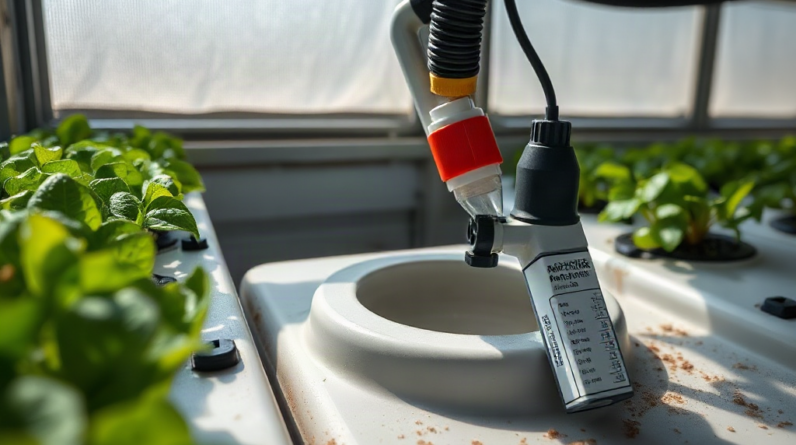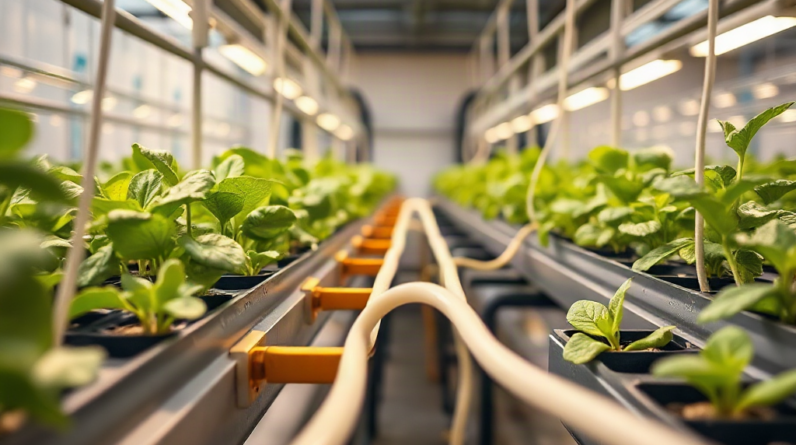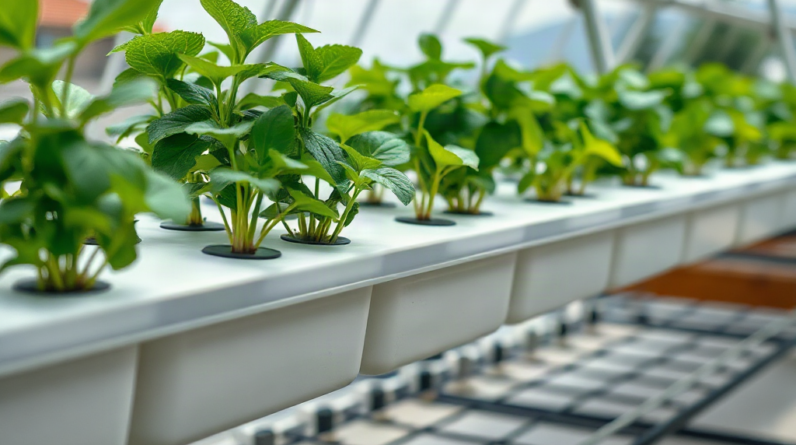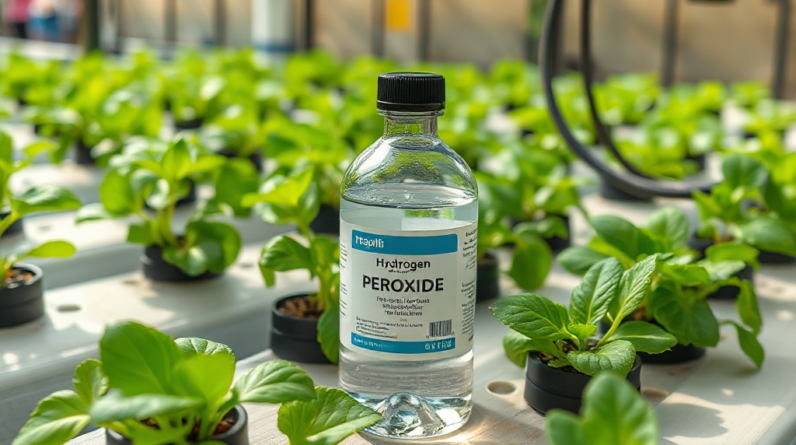
Hydrogen peroxide for hydroponic system cleaning is useful for loosening organic residue and reducing microbial contamination when the system is empty, the solution is properly diluted, and all surfaces receive adequate contact time before thorough rinsing. Remove plants, nutrient solution, pumps, tubing, and visible debris first, then apply a fresh diluted solution according to the product label rather than guessing from household-strength peroxide. Hydrogen peroxide breaks down into water and oxygen, but concentrated material can damage roots, irritate skin, corrode some components, and harm beneficial biology. It is a sanitation step, not a substitute for removing biofilm, correcting light leaks, or maintaining clean reservoirs between crops.
What Hydrogen Peroxide Does in an Empty Hydroponic System
Hydrogen peroxide is an oxidizing compound that can break down into water and oxygen. In an empty hydroponic system, that reaction may help loosen organic deposits and reduce some microorganisms on reservoirs, channels, trays, tubing, and pump components. Its usefulness depends less on simply pouring it into the tank than on whether the liquid reaches contaminated surfaces after dirt and plant debris have been removed.
Biofilm is the slimy layer that causes many cleaning failures. It can contain organic residue, mineral deposits, and microorganisms protected inside a sticky matrix. A peroxide solution may weaken that layer, but heavy buildup still needs physical scrubbing or flushing. A grower who treats a dirty reservoir without removing leaves, roots, and sediment may see bubbling and assume the system is sanitized while residue remains in elbows, impellers, and narrow lines.
Use the treatment only after removing living plants whenever possible. Roots are sensitive to oxidizing solutions, and a concentration suitable for an empty system should not automatically be treated as a root-zone additive. Even when peroxide has broken down, the system may still contain loosened debris or concentrated pockets trapped in tubing. The safer operating principle is simple: clean and sanitize between crops, not while edible roots are actively drinking from the reservoir.
A small deep-water culture bucket illustrates the distinction. If the bucket has a light film and no plants remain, a diluted peroxide wash followed by brushing and rinsing may be practical. If a mature plant is still growing, removing the plant may sacrifice the crop, so a full sanitation cycle should wait unless a serious contamination problem makes crop loss the lesser risk. Routine reservoir hygiene, light exclusion, and removal of dead roots are usually more useful than repeated chemical treatments.
For readers comparing this method with ordinary soap, detergent is better suited to lifting grease and surface soil, while peroxide provides oxidation. Neither replaces rinsing. Avoid mixing peroxide with acids, chlorine products, ammonia, or other cleaners; unpredictable reactions and irritating vapors can result. The cleaning objective should be a visibly clean, residue-free system before the next nutrient solution is prepared.
Choosing Concentration and Contact Time
The correct peroxide concentration depends on the product strength, the surface being treated, the contamination level, and the manufacturer’s instructions. Household bottles are commonly sold at a lower strength than concentrated agricultural or commercial products, so volume-based advice copied from another bottle can produce a dangerously strong mixture. Read the label, confirm the percentage, and calculate dilution before opening the container.
Contact time matters because oxidation is not instantaneous across every surface. A brief splash may wet the reservoir wall but fail to reach the interior of a return line. A circulating wash can improve coverage, yet it may not clean a pump housing if the impeller is blocked with roots. Remove accessible parts and inspect them instead of assuming that circulation has reached every hidden area.
Follow the product label for dilution, application method, ventilation, protective equipment, and disposal. If the label does not describe hydroponic equipment cleaning, choose a product with clear surface-use directions or consult the manufacturer rather than improvising a recipe. Wear gloves and eye protection, keep the product away from children and pets, and never store a diluted mixture in an unmarked container.
A practical comparison is between a light maintenance wash and a heavily fouled reset. Light residue may respond to physical rinsing followed by a properly labeled peroxide sanitation step. Thick brown slime, clogged emitters, or an odor that returns after cleaning usually calls for disassembly and mechanical removal first. Increasing chemical strength is not a substitute for reaching the contaminated surface, and stronger is not automatically more effective.
Do not judge completion by bubbles alone. Peroxide can foam when it contacts organic matter, but foaming does not measure the remaining concentration or prove that pathogens have been eliminated. After the stated contact period, drain the solution and rinse repeatedly with clean water. Pay special attention to pump inlets, tubing ends, gaskets, net-pot supports, drain fittings, and any low point where liquid can pool.
A Practical Cleaning Sequence for Reservoirs and Plumbing
A reliable cleaning sequence separates debris removal, washing, sanitation, and final rinsing. Begin by switching off pumps, lights, and other equipment, then empty the nutrient solution into an appropriate disposal location. Remove plants, root fragments, growing media, net pots, air stones, screens, and removable plumbing. Photograph tubing connections before disassembly if the layout is complicated; reassembly errors can create leaks or reverse flow.
Rinse loose material away before applying any chemical. Use a soft brush or non-abrasive pad on the reservoir, lid, channels, and fittings. Scrape mineral scale carefully with a tool that will not gouge plastic. For tubing, push clean water through the entire run and inspect the discharge. A line that appears clear from the outside may release brown particles when flushed.
Prepare the peroxide solution only after confirming the product concentration and label directions. Wet all interior surfaces, or circulate the solution through the pump and plumbing for the recommended period while the system remains empty. Keep the solution moving if the equipment design leaves dry zones, but do not run a pump that is not rated for the liquid or that may be damaged by debris entering the impeller.
Use this compact inspection sequence before returning the system to service:
- Check the reservoir seams, lid underside, and corners for film or trapped roots.
- Open pump covers and examine impellers, screens, air stones, and drain fittings.
- Flush every tubing branch, including overflow and return lines.
- Drain completely, rinse with clean water, and repeat if odor, foam, or residue remains.
- Allow components to drain and dry when the equipment and crop schedule permit.
Reassemble only after the system is free of chemical residue. Fill with clean water and run the pump briefly to flush the plumbing again, then drain it before mixing nutrients. This extra rinse is particularly worthwhile in small systems with narrow tubing, where a little trapped solution can reach the fresh reservoir later. Check for leaks and normal flow before installing plants.
Peroxide should be treated as one part of a sanitation routine. A light-proof reservoir, clean hands and tools, prompt removal of dead roots, and regular solution changes reduce the organic load that makes any cleaner work harder. The most successful reset is usually the one that combines physical access with measured chemical use rather than relying on a strong solution poured into an assembled system.
Risks, Mistakes, and Better Alternatives
The main hazard is misapplication: using an unknown concentration, leaving the solution in contact too long, or allowing it to reach living roots. Concentrated peroxide can damage skin and eyes, bleach some materials, and harm plants. Oxidation can also reduce or eliminate beneficial microbial populations, so peroxide is a poor fit for a system deliberately managed around living biological inputs.
Never combine hydrogen peroxide with chlorine bleach, acids, vinegar, ammonia, or other cleaning products. Drain one product fully and rinse before using another. Keep the original container closed, protected from heat and light, and clearly separated from nutrient concentrates. If a spill reaches the eyes or skin, follow the product label and seek appropriate medical or poison-control guidance.
Material compatibility deserves attention. Many hydroponic parts are made from plastics that tolerate brief cleaning exposure, but seals, tubing, adhesives, coatings, and metal components may respond differently. A hidden test on a small removable part can reveal discoloration or brittleness before the whole system is treated. Replace cracked tubing or swollen gaskets; chemical cleaning cannot restore a failing component.
Some growers use peroxide in a running reservoir to control slime. That approach creates a different risk profile because plants, roots, beneficial microbes, and nutrient chemistry are present. Root browning, stalled growth, or loss of biological balance may follow an aggressive treatment. If a living crop has a root problem, first check water temperature, oxygenation, dissolved debris, light exposure, and sanitation history rather than assuming peroxide is the universal remedy.
For some facilities, a labeled sanitizer designed for food-contact or agricultural equipment may be a more appropriate alternative, provided the product instructions match the equipment and use case. Hot water, detergent, brushing, and clean-water flushing may be enough for ordinary residue. Peroxide is most defensible when the system is empty, surfaces are accessible, the product is labeled for the intended use, and the operator can complete a full rinse.
When to Clean and How to Verify the Result
Clean the system between crops, after a crop with substantial root debris, and whenever slime, persistent odor, clogged lines, or unexplained residue appears. The calendar matters less than the condition of the equipment. A lightly loaded lettuce raft may need a different schedule from a warm, heavily planted system with exposed channels and frequent root shedding.
Inspect the reservoir during routine maintenance rather than waiting for a pump to lose flow. Look beneath lids, around return outlets, inside net-pot supports, and at the lowest points of tubing. A light leak can feed algae, while warm stagnant sections encourage faster buildup. Correcting those conditions is more durable than repeating peroxide washes every few days.
Verification should be physical and operational. Surfaces should feel clean rather than slippery, rinse water should be clear, tubing should pass water at the expected rate, and the pump should start without unusual noise. A faint chemical odor or persistent foam after rinsing indicates that more flushing is needed. Do not put plants back simply because the reservoir looks clean from above.
Keep a brief cleaning record with the product name, labeled strength, dilution, date, parts treated, and any component replaced. The record helps distinguish a sanitation failure from a plumbing problem or a reservoir-management issue. If the same biofilm returns quickly, investigate light exposure, dead roots, poor circulation, dirty tools, and incomplete disassembly before increasing peroxide concentration.
A sensible priority order is physical removal first, complete surface coverage second, label-directed contact time third, and rinsing last. That sequence protects equipment and reduces the temptation to solve visible contamination with increasingly harsh chemistry. The internal resource Hydrogen peroxide for hydroponic system cleaning can be paired with related maintenance notes when planning a crop-change reset.
Frequently Asked Questions
Can hydrogen peroxide clean a hydroponic reservoir?
Yes, it may sanitize and loosen organic residue in an empty reservoir when used according to the product label, followed by physical cleaning and thorough rinsing.
Can I add peroxide to a reservoir with plants?
Do not assume a cleaning concentration is safe for roots. Treating a live crop can damage roots or beneficial organisms, so follow a product’s specific directions or wait until the system is empty.
Does peroxide remove hydroponic biofilm?
It may weaken biofilm, but thick buildup still requires brushing, disassembly, and flushing. Chemical exposure alone may leave residue inside pumps and tubing.
Should I rinse after using hydrogen peroxide?
Yes. Drain the solution and flush all treated surfaces with clean water, paying special attention to narrow lines, pump housings, fittings, and low points where liquid can collect.
Can peroxide be mixed with bleach or vinegar?
No. Mixing peroxide with bleach, acids, vinegar, ammonia, or other cleaners can create hazardous reactions. Use one product at a time and rinse fully between products.
Further Reading
Authoritative Sources
- Academy of Nutrition and Dietetics
eatright.orgProfessional nutrition guidance, healthy eating resources, and practical dietitian-reviewed advice.
- U.S. Department of Agriculture
usda.govOfficial food, nutrition, agriculture, and consumer guidance from the USDA.
- NIH Office of Dietary Supplements
ods.od.nih.govResearch-based fact sheets on nutrients, supplements, dietary intake, and safety considerations.
- International Society of Sports Nutrition
sportsnutritionsociety.orgEvidence-informed sports nutrition resources and position stands for active people and athletes.
Conclusion
Hydrogen peroxide can have a useful place in hydroponic system cleaning, but its value comes from controlled application rather than high concentration. Empty the system, remove roots and sediment, scrub accessible surfaces, circulate or apply a label-directed solution, and rinse every reservoir, pump, fitting, and tubing branch before replanting. Protect yourself with appropriate handling precautions, and never combine peroxide with other cleaners.
Persistent slime usually points to an unresolved condition such as light entering the reservoir, warm stagnant water, dead roots, or incomplete disassembly. Record the product and procedure so recurring contamination can be diagnosed instead of treated blindly. A clean, thoroughly rinsed system with corrected environmental causes is a stronger foundation for the next crop than repeated peroxide dosing during active growth.
Related Content
- The Ultimate Guide to 10 Effective Hydroponic Plants for Beginners in 2025
- How to Improve Pollination in Hydroponic Systems: Essential Techniques and Methods
- The Ultimate Guide to the Best hydroponic garden kit for 2025: 10 Effective Tips
- Mixed Herb Container Planning for Hydroponic Gardens: Compatible Pairings and Spacing
- The Ultimate Guide to Hydroponic Gardening: 10 Proven Strategies for 2025