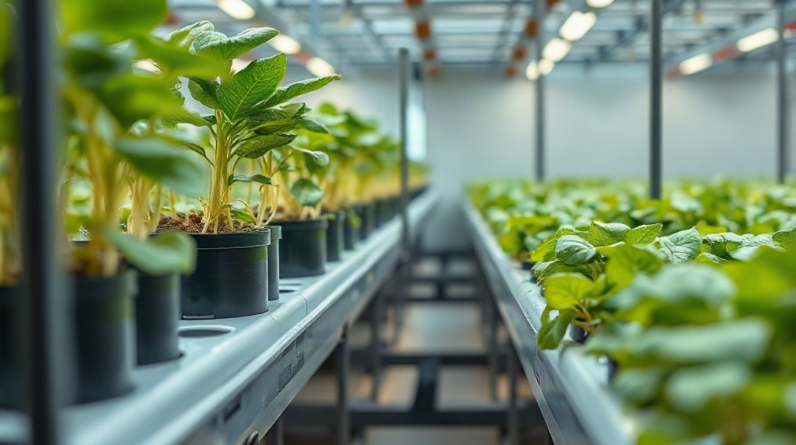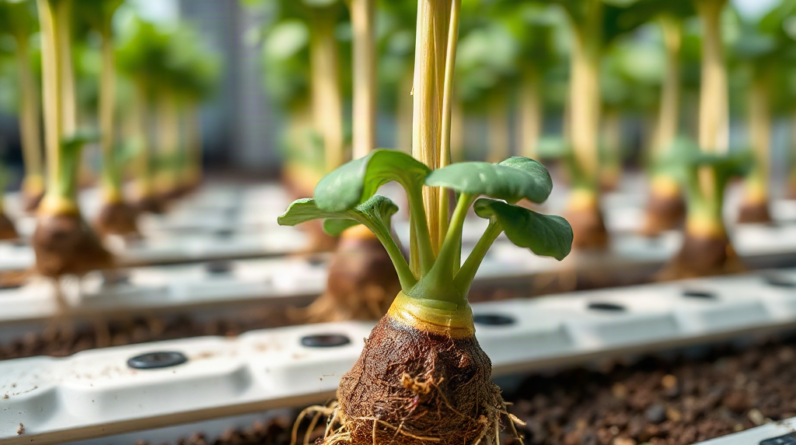
Troubleshoot root issues in hydroponic systems by inspecting root color, texture, smell, and distribution before checking reservoir temperature, dissolved oxygen, pH, electrical conductivity, flow, and irrigation timing. Healthy roots are generally firm and pale, although nutrients can stain them; slippery tissue, easy breakage, or a sour odor is more concerning than color alone. Compare affected plants with healthy plants sharing the same reservoir to determine whether the cause is system-wide or localized. Correct oxygen, temperature, circulation, and moisture problems first, then replace unstable solution and remove dead tissue where practical. Track new root growth rather than expecting damaged roots to regain their original appearance.
Identify What the Roots Are Actually Showing
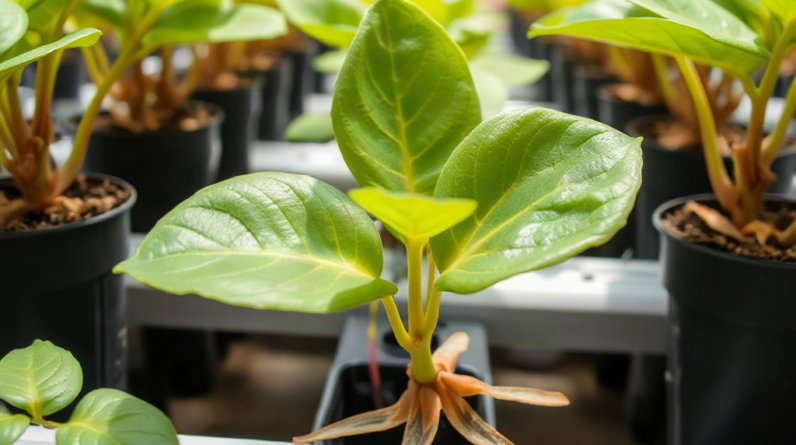
Root color by itself is an unreliable diagnosis. A healthy young root system is commonly cream-colored or white, but mineral nutrients, organic additives, beneficial microbe products, clay dust, and some growing media can leave tan or brown staining. Stained roots may remain firm, branched, and odor-free. Deteriorating roots are more likely to feel slimy, shed their outer tissue when handled, break with little pressure, or smell sour and stagnant.
Inspect several parts of the root mass rather than lifting one visible strand. Look near the crown, through the center, and at the newest tips. Damage confined to the dense center can indicate poor oxygen movement through an oversized root mass, while dry or discolored upper roots may point to a low solution level, blocked emitter, or irrigation gap. Sparse roots on one side of a net pot can reveal uneven wetting rather than a reservoir-wide disease.
The leaves provide supporting evidence, but they should not replace a root inspection. Wilting in a full reservoir can occur when damaged roots cannot move enough water. Pale growth may follow impaired nutrient uptake, yet it can also result from incorrect pH, weak nutrient concentration, or inadequate light. Leaf symptoms often appear after the root-zone fault has been developing, so treating the foliage alone rarely resolves the underlying limitation.
A Compact Symptom Check
- Firm, tan roots without odor: investigate staining before assuming decay.
- Soft roots with a sour smell: check temperature, oxygenation, and stagnant areas promptly.
- Dry upper roots: verify solution height, emitter coverage, and irrigation intervals.
- Brown tips with high EC: consider excessive solution strength or rapid water loss.
- Roots circling a drain or pump: inspect for restricted return flow and mechanical damage.
Photograph the roots under similar lighting and record the smell, texture, and location of damage. A photo taken under a purple grow light can exaggerate discoloration, while handling roots repeatedly can create new injuries. The useful comparison is not simply white versus brown; it is firm versus collapsing tissue, active pale tips versus stalled tips, and normal reservoir odor versus evidence of stagnation. That distinction prevents unnecessary reservoir treatments when the roots are merely stained.
Test the Root-Zone Conditions in the Right Order
Environmental measurements should be taken from the operating system, not from a sample that has been sitting in a warm room. Begin with solution temperature and circulation because warm, poorly moving water holds less oxygen and can place roots under stress. Confirm that air stones are bubbling across the reservoir, pumps are moving their expected volume, return lines are not submerged in a way that removes useful surface agitation, and channels do not contain motionless pockets.
Dissolved oxygen is best measured with a suitable meter, but equipment inspection still reveals valuable clues when no meter is available. A noisy air pump may produce little air through a clogged stone. A water pump can run while its intake is wrapped in roots. In a nutrient film technique channel, a tilted bench or root dam can leave one plant flooded and the next nearly dry. Visible bubbles alone do not prove that oxygenated solution reaches the interior of every root mass.
Measure pH next with a calibrated instrument or a fresh test method. A single reading shows the current condition; readings taken at the same time each day reveal whether the solution is drifting. Rapid pH movement can follow a small reservoir, inaccurate nutrient mixing, poor source-water alkalinity management, microbial activity, or large changes in plant water use. Avoid repeatedly adding acid and base to chase tiny fluctuations because the corrections add dissolved salts and can create wider instability.
Electrical conductivity, or EC, helps distinguish an overly concentrated solution from one that has been diluted or depleted. Compare the reading with the crop’s established feeding range and its growth stage rather than applying one universal target. If the reservoir level falls while EC rises, plants may be using proportionally more water than nutrients. If both the water level and EC decline, nutrient uptake may be stronger. An apparently normal EC does not rule out an imbalance because EC reports total dissolved ionic concentration, not the amount of each nutrient.
Complete the sequence by checking irrigation delivery and physical obstructions. In drip systems, collect output from multiple emitters for the same interval and compare the volumes. In ebb-and-flow systems, observe a full flood and drain cycle instead of relying on timer settings. Deep-water culture requires adequate aeration at every bucket, not only in the central reservoir. Readers developing a repeatable inspection routine can use this how to troubleshoot root issues in hydroponic systems workflow to keep observations and measurements connected.
Separate System-Wide Failures From Local Problems
The distribution of symptoms often identifies the fault faster than another reservoir adjustment. If every plant connected to one solution begins wilting or developing damaged roots at about the same time, inspect shared components: nutrient mixing, reservoir temperature, aeration, source water, and the main pump. If only one plant is affected, examine its emitter, root placement, stem base, container, and nearby plumbing before changing conditions for the healthy plants.
Consider a recirculating drip system with eight plants where one plant wilts each afternoon. Replacing the entire nutrient solution may appear cautious, but it does not correct a partially blocked dripper. A timed collection test could show that the weak plant receives half the volume delivered to its neighbors. Conversely, identical discoloration appearing across all eight plants shortly after a reservoir change points toward a shared event, such as mixing error, temperature change, or interrupted circulation.
Plant age and transplant history also matter. A recently transplanted seedling with limited roots cannot be compared directly with an established plant that fills its container. If a young transplant is placed too high above the moisture line, its starter plug can dry even though roots hang near the solution. If it sits too low, a constantly saturated stem base and plug may receive inadequate air. Adjusting the whole reservoir level to accommodate one poorly positioned plant can then expose the remaining plants to a new problem.
Root density creates another local constraint. Mature roots can enter return pipes, surround pump intakes, and form mats that retain debris. Cutting a large root mass aggressively may restore flow but also removes active uptake tissue and opens wounds. A better first response is to support the plant, clear only the material causing the obstruction, restore hydraulic movement, and reassess. Preventive screens and accessible plumbing reduce the need for disruptive trimming later.
Build a simple map of the system and mark where symptoms occur. Record whether damage appears near the supply end, return end, warm side, shaded side, or one elevation. That spatial pattern is especially useful in long channels and linked buckets, where the reservoir reading can look acceptable while distant root zones receive different flow or temperature. The central mistake is treating every brown root as a reservoir disease; location, timing, and neighboring plants often show that the actual cause is mechanical or positional.
Correct the Cause and Judge the Recovery
Recovery begins by stabilizing the root environment without stacking several unverified treatments. Restore circulation, aeration, correct solution delivery, and bring pH and EC back toward the crop-appropriate range gradually. If the solution smells abnormal, contains substantial debris, or cannot be corrected predictably, replacing it with properly mixed solution may be more reliable than making repeated additions. Clean measuring tools and inspect the reservoir before refilling so the same obstruction or residue does not immediately undermine the correction.
Remove roots only when tissue is clearly dead, detached, or obstructing essential flow. Use clean tools and avoid pulling on firm roots that remain connected to the plant. Severely damaged plants may benefit from isolation if the system design allows it, both to simplify observation and to avoid leaving decomposing material in shared water. Isolation is less practical in a tightly integrated nutrient film or recirculating system, where stabilizing the shared environment may deserve priority.
Be cautious with sterilants, biological inoculants, and enzyme products. Each approach can be compatible with some operating methods, but combining them without understanding their interactions is counterproductive. A disinfecting treatment may also suppress organisms introduced by a microbial product. Organic additives can increase biological demand and residue if the system lacks suitable filtration and oxygenation. Product labels, crop suitability, system materials, and safe handling requirements should govern use rather than an improvised mixture of remedies.
Judge progress by new growth. Damaged roots may stay brown even after conditions improve, so waiting for old tissue to become white can lead to needless additional treatment. Positive signs include fresh pale root tips, firmer tissue, stable reservoir odor, improved daytime leaf posture, and consistent water use. Continued softening, spreading discoloration, falling uptake, repeated pH instability, or renewed wilting indicates that the cause remains active.
Keep a short recovery log with temperature, pH, EC, reservoir level, actions taken, and root observations. Change one major variable at a time when plant condition permits; otherwise, it becomes difficult to identify which correction worked. An urgent pump failure justifies immediate combined action, but a mildly stained, firm root system calls for measurement rather than aggressive treatment. A structured how to troubleshoot root issues in hydroponic systems record also makes recurring seasonal heat, undersized aeration, or emitter fouling easier to recognize.
Frequently Asked Questions
Are brown hydroponic roots always root rot?
No. Nutrients, media dust, and some additives can stain healthy roots. Texture, odor, new tip growth, and plant performance are more reliable diagnostic clues than color alone.
Should damaged roots be cut off?
Remove tissue that is clearly dead, loose, or blocking flow, but avoid aggressive trimming of firm roots. Clean tools and minimal handling reduce additional injury.
Can a plant have root trouble when the reservoir pH is correct?
Yes. Correct pH does not confirm adequate oxygen, suitable EC, even irrigation, or unrestricted flow. Check the complete root-zone environment and the delivery point at the plant.
How can I tell whether roots are recovering?
Look for new pale tips, firmer tissue, normal odor, steadier water use, and improved leaf posture. Existing damaged roots may not return to their original color.
When should the nutrient solution be replaced?
Replacement is reasonable when the solution smells abnormal, contains heavy debris, was mixed incorrectly, or remains unstable after measured corrections. Fix pumps, blocked lines, and sanitation faults before refilling.
Conclusion
Reliable root diagnosis comes from combining direct inspection with operating measurements and symptom distribution. First distinguish harmless staining from tissue that is soft, breaking down, or producing an abnormal odor. Then verify temperature, aeration, circulation, pH, EC, irrigation delivery, and plumbing under normal operating conditions. Whether one plant or the entire connected crop is affected determines how broadly corrective action should be applied.
Restore the physical root environment before reaching for multiple additives, and avoid removing healthy tissue simply because it is discolored. Record each change and watch for fresh root tips, stable solution behavior, consistent uptake, and improved plant posture. If deterioration continues, recheck hidden flow restrictions, calibration, mixing practices, and warm or stagnant zones rather than repeating the same treatment.
Related Content
- Hydroponic Growing Media: Top Choices for Successful Indoor Cultivation
- Effects of Inadequate Ventilation in Hydroponics: Key Impacts on Plant Health and Growth
- Growing Hydroponic Vegetables in Cold Rooms With Reliable Temperature Control
- A Beginner’s Guide to Hydroponic Gardening
- How to Transition From Soil to Hydroponics: Essential Steps and Common Mistakes