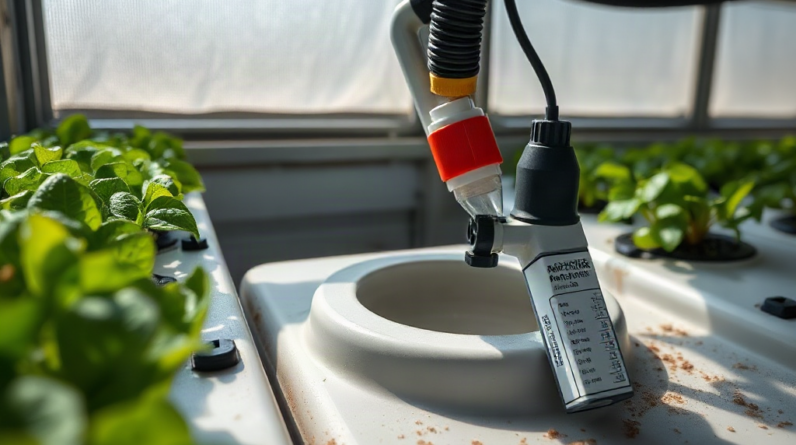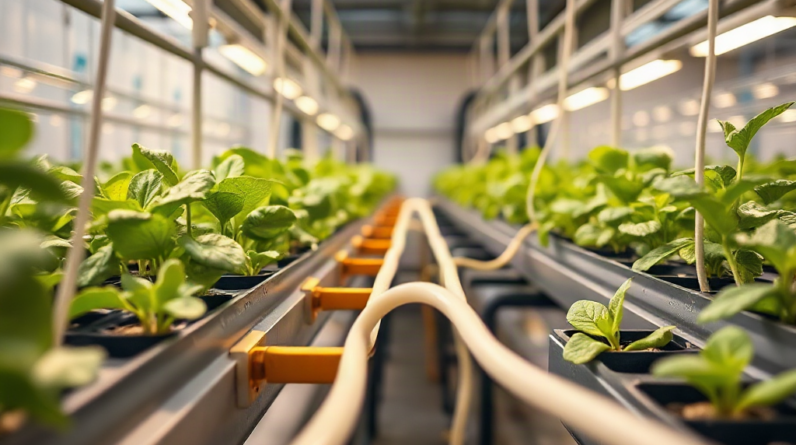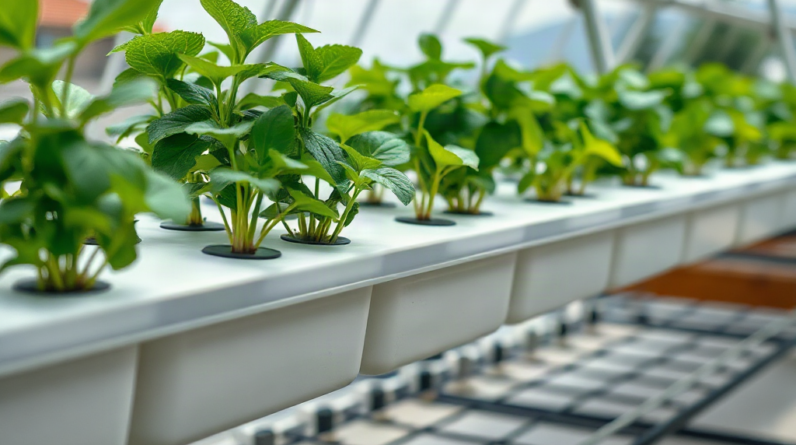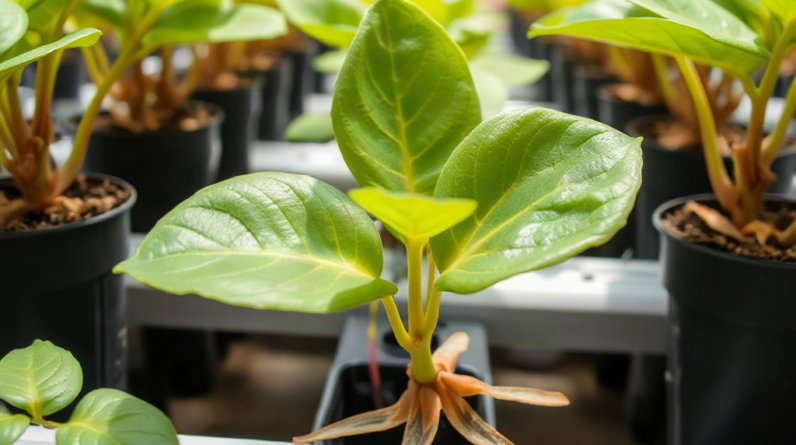
Assess plant health in hydroponic systems by comparing leaf appearance, new growth, root condition, and reservoir readings over time rather than judging one symptom alone. Inspect whether new leaves are correctly shaped and evenly colored, confirm that roots are firm and pale rather than slimy or foul-smelling, and record pH, electrical conductivity, solution temperature, and water use. Match abnormalities to their location on old or young foliage before changing nutrients. A stable trend across several observations is more informative than a single reading, while rapid wilting, root discoloration, or stalled water uptake warrants immediate investigation.
Read the Plant Before Adjusting the Reservoir
Leaf position, color, texture, and growth rate provide different kinds of evidence, so they should be read together. A healthy plant normally produces new leaves at a predictable pace for its species and growth stage. Those leaves should expand without severe distortion, while mature foliage should remain functional rather than declining suddenly. Compare plants of the same variety and age whenever possible; a compact lettuce cultivar and a fruiting tomato cannot be judged by the same size or growth habit.
Begin with the growing point. New growth reflects conditions the plant is experiencing now, while older leaves preserve evidence of earlier stress. Pale or misshapen young foliage can indicate that a nutrient is unavailable at the root, but the same appearance may follow damaged roots or an unsuitable pH. Yellowing that begins on older leaves suggests a different pattern because the plant can move some nutrients from old tissue into new growth. Location is therefore more useful than the word “yellow.” Note where discoloration starts, whether veins remain green, and whether the change is spreading upward.
Leaf posture adds another layer. Temporary drooping near the end of an intense light period may reflect high transpiration demand, especially in large plants. Persistent wilting while the root zone is wet points toward poor root function, low oxygen, excessive solution temperature, or stem damage rather than a lack of water. Marginal browning can follow high salt concentration, uneven water movement through the plant, or environmental stress. Adding more fertilizer without checking these possibilities may intensify the injury.
Look for physical causes before treating a color pattern as a nutrient deficiency. Inspect leaf undersides, growing tips, and stem junctions for insects, webbing, residue, feeding scars, or localized lesions. Compare affected plants with their neighbors. A problem concentrated beneath one lamp, beside a fan, or at the far end of a channel is more likely to involve the growing environment or solution delivery than the nutrient formula itself.
Photographs taken from the same angle and under neutral light make subtle changes easier to detect. Avoid assessing color directly under purple or strongly tinted grow lights. When documenting how to assess plant health in hydroponic systems, include one image of the whole canopy and another of the affected tissue. The common mistake is reacting to one damaged leaf; the better question is whether healthy new tissue is appearing and whether the affected area is expanding.
Inspect Roots and the Root-Zone Environment
Root condition often distinguishes a nutritional-looking symptom from a delivery problem. Healthy hydroponic roots are generally firm, branching, and free from a rotten odor. Many are cream or white, although nutrient products, organic additives, and growing media can stain roots tan or brown without causing decay. Color alone is not decisive. Texture, smell, root-tip activity, and the plant’s water uptake provide stronger evidence.
Examine roots without tearing them away from the plant. In deep-water culture, lift the net pot only enough to inspect the upper and lower root mass. In channels or drip systems, check accessible drain roots and emitters rather than dismantling every plant. Firm stained roots that separate easily and continue producing pale tips are less concerning than roots that feel slippery, shed their outer layer, clump together, or smell sour. A plant with compromised roots may wilt despite sitting above abundant solution because damaged tissue cannot move enough water.
Root health depends on oxygen, temperature, cleanliness, and uninterrupted flow. Warm solution holds less dissolved oxygen than cool solution and can increase biological activity, while a failed air pump or blocked return can create a rapid decline. Yet colder is not automatically better: excessively cool roots can slow nutrient uptake and growth. The practical target should suit the crop and system rather than relying on one universal number.
Inspect the equipment supporting the roots. Confirm that air stones are producing vigorous, evenly distributed bubbles, pumps are running, return lines are open, and channels are not holding stagnant pools. In drip irrigation, compare emitter output at the beginning and end of each line. One weak emitter can create a single wilted plant while every reservoir measurement appears normal. Conversely, widespread root decline across the system points toward a shared factor such as temperature, oxygenation, contamination, or solution composition.
Do not assume that cloudy water or surface biofilm has one automatic cause. Mineral precipitation, harmless staining, algae, and microbial growth require different responses. Trace the timing: ask whether cloudiness appeared after mixing concentrates, after light reached the reservoir, or after roots began deteriorating. Shielding the solution from light, removing dead root material, cleaning accessible components, and restoring aeration may be appropriate, but severe decay can require isolating affected plants and sanitizing the system between crops.
A common failure mode is cleaning the reservoir while leaving stressed roots, warm plumbing, or blocked flow unchanged. The solution may look clearer for a day while the underlying condition continues. Root assessment should therefore include both plant tissue and the equipment creating the root environment.
Interpret pH, EC, Temperature, and Water Use Together
Reservoir measurements become diagnostic when they are treated as trends rather than isolated targets. Record pH, electrical conductivity or conductivity-based nutrient strength, solution temperature, reservoir volume, and recent additions at the same time each day. Calibrate meters according to their instructions and rinse probes appropriately. A precise-looking value from a poorly maintained meter can lead to unnecessary corrections and nutrient imbalance.
PH influences the chemical availability of nutrients, but repeated aggressive adjustment may be more damaging than a modest drift. If pH moves steadily, first verify the meter and review water additions, plant uptake, root condition, and reservoir size. Small reservoirs change faster because each liter consumed represents a larger share of the total volume. A stable pH does not prove the crop is healthy, and an upward or downward movement is not automatically a disease signal; the direction must be interpreted alongside plant appearance and solution behavior.
Electrical conductivity indicates the combined concentration of dissolved ions, not whether every nutrient is present in the correct proportion. Suppose the reservoir level falls while EC rises. The plants are removing proportionally more water than dissolved nutrients, so topping up with full-strength solution could push concentration higher. If both the water level and EC decline, nutrient ions are being removed along with water, though the appropriate response still depends on crop stage and the formula in use. If water uptake stalls, check roots and climate before assuming the plants need a stronger feed.
Solution temperature helps explain both uptake and root risk. Record it near the root zone rather than assuming room temperature represents the reservoir. A tank on a cold floor may differ sharply from a sunlit return line. Canopy temperature and humidity also affect transpiration: strong airflow, dry air, or intense light can increase water demand even when nutrient concentration has not changed.
Use this compact interpretation sequence before making a correction:
- Verify the reading: Recheck the sample and confirm that the probe is clean and calibrated.
- Compare the trend: Review the previous several entries, water additions, and nutrient changes.
- Inspect the plant: Locate symptoms on young or old tissue and check root texture and odor.
- Check delivery: Confirm flow, aeration, emitter output, and reservoir volume.
- Change one variable: Make a measured adjustment, document it, and watch new growth.
The weak approach is chasing pH and EC several times per day while ignoring the plant. The stronger approach uses those measurements to test a physical observation. More detail on how to assess plant health in hydroponic systems should always connect instrument readings with roots, foliage, and system operation.
Use a Repeatable Plant-Health Assessment Routine
A consistent inspection routine makes gradual decline visible before it becomes a system-wide failure. Perform a quick check at roughly the same point in the light cycle because leaf posture and water use change through the day. Start at the reservoir, follow the delivery path, and then inspect representative plants from different locations. Sampling only the largest plant can hide weak flow at the end of a channel or heat stress at the canopy edge.
Divide the routine by urgency. Daily observations should cover pump operation, leaks, reservoir level, unusual odors, canopy wilting, and obvious pest activity. Scheduled measurements can include pH, EC, solution temperature, and plant growth markers such as leaf number or canopy width. Less frequent maintenance includes meter calibration, line inspection, pump cleaning, and review of accumulated records. The exact frequency depends on reservoir size, crop demand, and system complexity; a small tank supporting mature tomatoes can change faster than a larger reservoir feeding young greens.
When a symptom appears, isolate variables instead of making several corrections at once. For example, if plants at the far end of a nutrient-film channel are smaller, compare channel slope, flow, root congestion, and solution temperature along the run. Replacing the nutrient solution may not correct an uneven delivery pattern. If every plant develops pale new growth after a pH meter begins giving erratic readings, validate the instrument before adding a concentrated supplement.
Judge recovery through new tissue and restored function. Damaged leaf margins and necrotic spots generally do not turn healthy again. Improvement appears as correctly formed new leaves, resumed root-tip growth, steadier water use, and a halted spread of symptoms. Removing every marked leaf can erase useful evidence and reduce photosynthetic area, so remove foliage mainly when it is dead, heavily infested, diseased, or obstructing necessary airflow.
Keep records simple enough to maintain. A useful entry includes date, crop stage, reservoir volume, pH, EC, temperature, water added, nutrient added, root notes, leaf notes, and any intervention. Mark affected positions on a basic system diagram. Location data can reveal patterns that a written note such as “lettuce yellowing” misses.
Escalate quickly when plants collapse rapidly, roots become extensively slimy, water develops a strong foul odor, or multiple plants deteriorate despite normal-looking readings. Separate questionable plants when feasible, verify meters with known standards, and examine shared equipment. The central mistake is treating the first plausible explanation as proven. Reliable assessment comes from agreement among plant symptoms, root evidence, reservoir trends, and the physical layout of the system.
Frequently Asked Questions
How often should hydroponic plants be inspected?
Check pumps, water level, wilting, leaks, and unusual odors daily. Record pH, EC, temperature, and plant observations often enough to reveal trends, with more frequent checks for small reservoirs or mature, water-hungry crops.
Are brown hydroponic roots always unhealthy?
No. Nutrients and additives may stain otherwise firm roots. Slime, tissue that slips apart, poor new root growth, foul odor, and declining water uptake are more concerning than color by itself.
Should damaged leaves be removed immediately?
Not automatically. Partly functional leaves still capture light and show whether damage is spreading. Remove leaves that are dead, heavily infested, clearly diseased, or creating airflow and sanitation problems.
Can normal pH and EC readings confirm that plants are healthy?
No. Those readings do not reveal blocked emitters, low oxygen, pests, root decay, or an imbalance among individual nutrients. Confirm health through new growth, roots, water use, and system performance.
What is the best sign that a stressed plant is recovering?
Healthy new growth is more reliable than changes in old damage. Look for normally shaped new leaves, fresh root tips, resumed expansion, stable water use, and no further spread of discoloration.
Conclusion
Sound hydroponic assessment depends on connected evidence. Read symptoms by their location and progression, then compare them with root texture, odor, solution trends, water use, and delivery performance. Verify instruments before changing the nutrient mix, and avoid correcting several variables simultaneously. A simple dated log and system map can expose recurring drift, weak emitters, warm zones, or plant-stage changes that memory misses. When stress occurs, preserve useful foliage, correct the confirmed cause, and evaluate recovery through new leaves and root tips rather than expecting old damage to disappear. The next practical step is to establish a baseline today: photograph representative plants, inspect roots, record reservoir measurements, and note flow at several positions. Future changes will then have a meaningful reference point.