
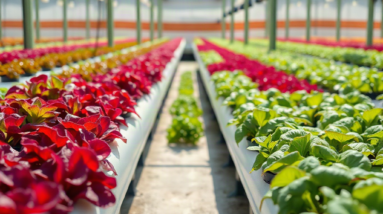
How to Create a Hydroponic Crop Rotation Plan Using Harvest Windows and Sanitation Gaps
Create a hydroponic crop rotation plan by mapping every bed or channel, grouping plants by growth duration and environmental needs, and assigning sowing, transplanting, harvesting, and sanitation dates to each space. Stagger fast crops such as lettuce and basil so mature plants leave shortly before replacement seedlings are ready.
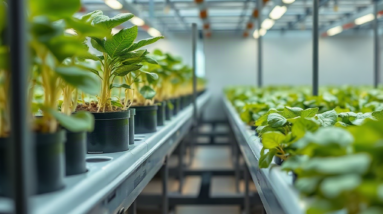
How to Manage Water Quality in Closed Hydroponic Systems: Monitoring, Correction, and Reset Triggers
Manage water quality in closed hydroponic systems by measuring pH, electrical conductivity, solution temperature, water level, and root condition on a consistent schedule, then correcting changes gradually rather than chasing individual readings. Replenish consumed water before interpreting conductivity, because evaporation can concentrate salts without indicating that plants need more fertilizer.

How to Identify and Treat Common Hydroponic Diseases: Causes, Symptoms, and Recovery Methods
Identify and treat common hydroponic diseases by comparing symptoms across roots, crowns, and leaves, then correcting the growing conditions that allow infection to spread. Brown, soft roots with a foul odor point toward root decay, while powdery growth, angular leaf spots, or water-soaked lesions suggest distinct foliar problems that require different responses.
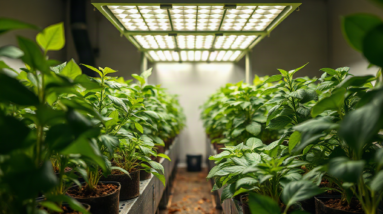
How to Evaluate the Impact of Lighting on Growth: Measurements, Trials, and Warning Signs
Evaluate the impact of lighting on growth by recording canopy PPFD, daily light integral, photoperiod, plant dimensions, and harvest weight while holding nutrients, temperature, airflow, and root-zone conditions as steady as possible. Establish a baseline, change only one lighting variable, and compare equal groups over a defined growth period.
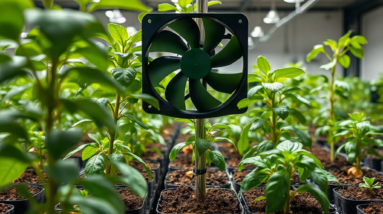
How to Improve Air Circulation in Hydroponic Setups With a Six-Point Fan Placement Checklist
Improve air circulation in hydroponic setups by creating a gentle, continuous air path above, through, and beneath the plant canopy rather than directing one powerful fan at the leaves. Use an intake or room-air opening, an exhaust fan where heat and humidity collect, and oscillating or circulation fans positioned to…
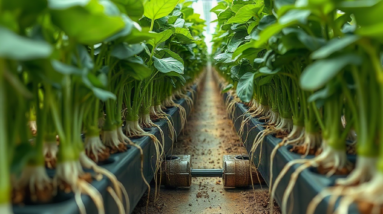
How to Deal With Root Competition in Hydroponics Without Crowding or Flow Blockages
Deal with root competition in hydroponics by reducing plant density, matching crop size to the channel or container, and preserving an open path for oxygenated nutrient solution around each root mass. Inspect roots before foliage declines, then separate removable plants, prune only healthy roots when the system permits it, or harvest crowded crops early.
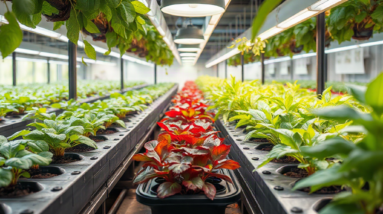
How To Maintain Optimal Humidity For Hydroponic Growth With VPD, Airflow, And Mold Prevention
Maintain optimal humidity for hydroponic growth by measuring relative humidity at canopy height, pairing it with room temperature, and adjusting ventilation, air movement, and dehumidification so leaves can transpire without staying wet. Young seedlings generally tolerate more moisture, while mature plants usually need drier air as foliage thickens and disease risk rises.
How To Adjust Nutrient Levels For Specific Crops: A Practical Feeding Plan
Adjust nutrient levels for specific crops by matching the fertilizer strength and mineral balance to the plant’s growth stage, then verify the result with EC, pH, and plant response. Leafy greens usually need a gentler solution than fruiting tomatoes or peppers, while seedlings require the lowest strength because young roots are easily stressed.
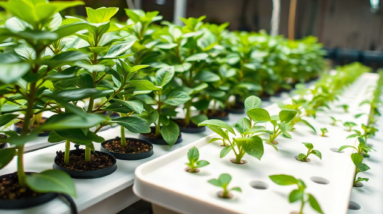
How To Choose The Right Hydroponic Nutrient Brand: A Label And Compatibility Checklist
Choose the right hydroponic nutrient brand by matching its complete formula to your crop, water source, growing system, and ability to measure pH and nutrient strength. Compare the guaranteed analysis for nitrogen, phosphorus, potassium, calcium, magnesium, and micronutrients; confirm whether the product is intended for hard or soft water; and…
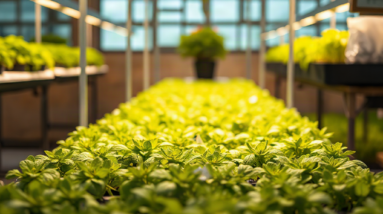
How To Manage The Temperature Of Hydroponic Solutions: Cooling Methods, Timing, And Warning Signs
Manage the temperature of hydroponic solutions by measuring the reservoir itself, shielding it from heat, and using active cooling when passive methods cannot hold a stable range. Many crops perform well when the solution remains roughly 65–72°F (18–22°C), although crop choice, dissolved oxygen, system design, and room conditions affect the useful target.