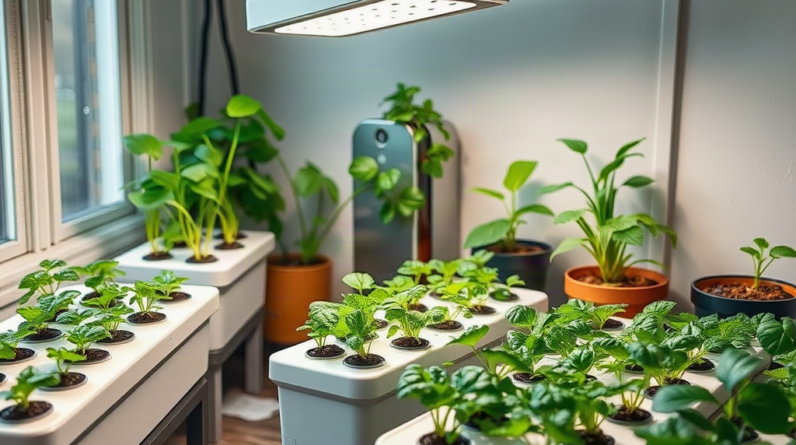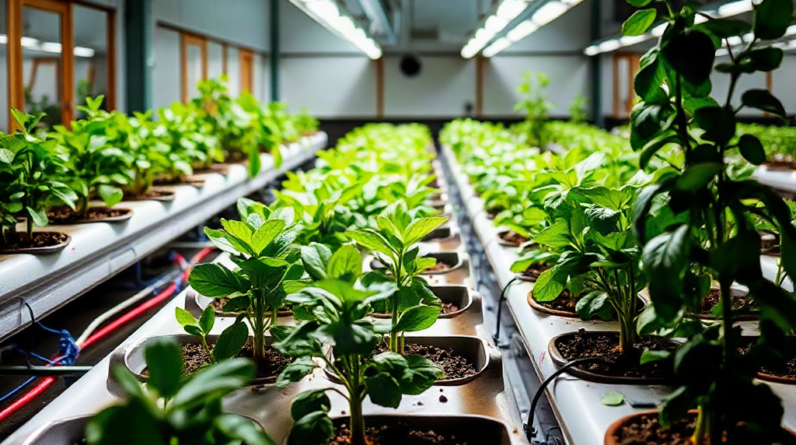
Troubleshooting uneven growth in hydroponic gardens works best by mapping weak plants by location, then comparing root condition, nutrient delivery, light exposure, airflow, and water temperature between strong and weak zones. A location-based pattern usually points to equipment or environmental variation, while scattered symptoms more often suggest plant age, transplant damage, pests, or individual root problems. Check irrigation output and roots before changing nutrient strength because blocked emitters, shallow channels, and low dissolved oxygen can mimic nutrient deficiency. Measure pH and electrical conductivity in the reservoir and at representative plant sites, correct one confirmed cause at a time, and judge recovery by healthy new growth rather than damaged leaves.
Map the Growth Pattern Before Adjusting the System
The position of undersized plants often reveals more than the leaf symptoms alone. Mark each plant as strong, intermediate, or weak on a simple sketch of the channels, buckets, towers, or grow tray. Record plant age, variety, transplant date, and visible symptoms. The resulting map can distinguish a system-level gradient from random problems affecting individual plants.
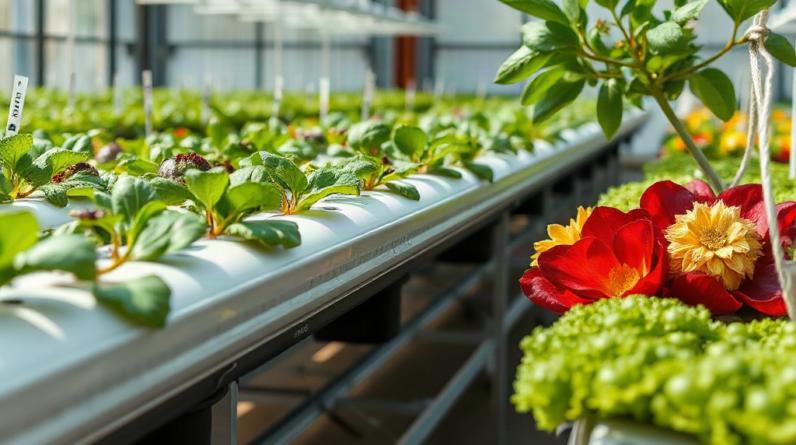
Weak growth concentrated at the end of a nutrient film technique channel suggests a different fault from weakness confined to the center of a raft bed. The first pattern may reflect an uneven channel slope, restricted flow, warming solution, or depleted oxygen along the run. The second can occur where dense foliage shades smaller plants or where circulation beneath the raft is poor. In a drip system, several weak plants supplied by one manifold branch make a partial blockage, pressure imbalance, or kinked line more plausible than a reservoir-wide nutrient shortage.
Plant history matters as much as location. A younger transplant should not be compared directly with an established plant simply because both occupy the same system. Seedling vigor, root damage during transplanting, cultivar growth habit, and differences in germination timing can persist for weeks. If one cultivar is naturally compact, its size alone is not evidence of stress; compare its leaf color, internode spacing, root development, and growth rate with plants of the same cultivar.
Use consistent observations rather than impressions. Photograph the canopy from the same position, measure plant height or leaf spread, and note where symptoms first appear. Older-leaf yellowing, distorted new leaves, wilt during the light period, and unusually long internodes point toward different mechanisms. Damaged leaves rarely return to a normal appearance, so their presence documents the earlier problem but does not reliably measure current recovery.
A useful first-pass check is:
- One row or branch affected: investigate distribution, slope, pressure, or local light.
- One side of the garden affected: compare lamp intensity, drafts, heat, and reservoir plumbing.
- Scattered individual plants affected: inspect roots, crowns, pests, transplant history, and emitters.
- Nearly every plant affected: verify the reservoir, source water, temperature, and controller accuracy.
Changing the nutrient recipe before making this map can hide the pattern and introduce a second problem. The most reliable approach to how to troubleshoot uneven growth in hydroponic gardens begins by identifying which plants share the same exposure, plumbing route, or planting history.
Test Water and Nutrient Delivery at Plant Level
Reservoir readings do not prove that every root zone receives the same solution. A well-mixed tank can still feed plants unevenly when a pump loses output, emitters accumulate deposits, return lines back up, or channels sit at different slopes. Test where the plants are growing rather than relying exclusively on the reservoir display.
Begin with flow. In a drip garden, place identical containers under representative emitters and run the system for a fixed interval. Compare an emitter serving a vigorous plant with one serving a weak plant, including outlets near and far from the pump. The exact volume matters less initially than a meaningful difference between outlets. Clean or replace restricted emitters and inspect filters before increasing irrigation duration; a longer cycle may overwater strong zones while still failing to correct a severe blockage.
In nutrient film systems, observe whether a thin, continuous film reaches every channel without deep pooling or dry patches. Confirm that channel supports have not shifted and that roots are not damming the return end. In deep-water culture, compare aeration among buckets or raft zones. A bubbling reservoir does not guarantee adequate movement in a remote container connected through narrow plumbing.
Measure pH and electrical conductivity with calibrated meters at the reservoir and, where practical, in return solution or selected root zones. A noticeable difference between supply and return readings can indicate uneven water uptake, evaporation, poor mixing, or salt accumulation. Do not chase small fluctuations with repeated additions. Meter resolution, sample temperature, and incomplete mixing can produce apparent changes that are not agronomically meaningful.
Electrical conductivity also requires interpretation. A high reading shows the solution conducts more strongly; it does not identify which nutrient is excessive. A low reading does not automatically prove a deficiency because plants can remain small when roots lack oxygen or irrigation frequency is inadequate. Source-water minerals contribute to the reading as well. Compare current values with the suitable range for the crop and growth stage, the nutrient manufacturer’s mixing directions, and the garden’s own stable baseline.
Check the physical mixing process if all zones are declining. Concentrates should be diluted into water separately rather than combined in concentrated form, which can encourage precipitation. Confirm the final reservoir volume and inspect for sediment. A common mistake is adding more fertilizer to compensate for pale plants before checking pH, root health, and flow. Excess concentration raises osmotic stress and can make water uptake harder, worsening the size difference. For a repeatable process, keep flow tests and meter checks together in your notes on how to troubleshoot uneven growth in hydroponic gardens.
Compare Roots, Light, Temperature, and Airflow
Root-zone and canopy conditions should be compared in pairs: one healthy plant and one weak plant of the same age and cultivar. This controls for normal variation and makes subtle differences easier to recognize. Inspect without tearing roots apart or exposing them to bright light longer than necessary.
Healthy roots often have numerous fine branches and a fresh appearance, although nutrient products can stain them tan or brown. Color by itself is therefore a weak diagnosis. More concerning signs include sloughing tissue, a slimy surface, loss of fine roots, an unpleasant odor, or a crown that remains wet and soft. Wilting despite available solution can occur when damaged roots cannot supply the canopy. Raising fertilizer strength will not restore impaired root function and may add stress.
Warm solution, stagnant pockets, accumulated organic debris, and inadequate aeration can contribute to root decline. Compare water temperature near the reservoir with the warmest channel, bucket, or tower. Also check whether pumps add heat and whether dark tubing receives direct light. Correcting excess warmth may require shading the reservoir and lines, increasing appropriate circulation, or moving heat-producing equipment rather than dropping frozen bottles into the tank, which causes short-lived temperature swings and creates sanitation work.
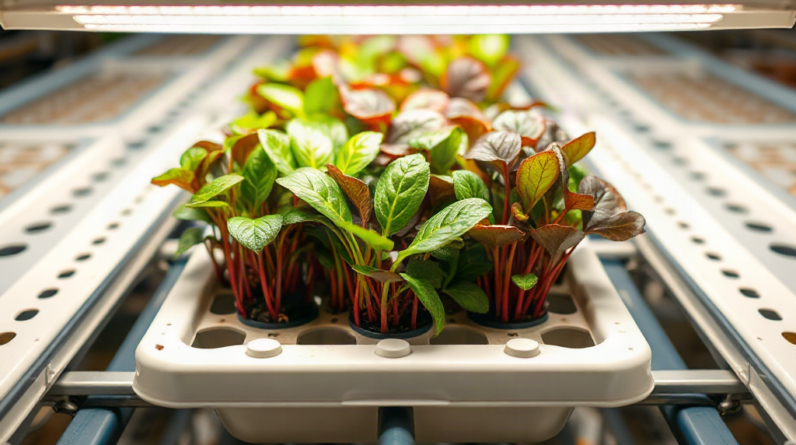
Light should be measured or at least compared at canopy height, not judged from how bright the room appears. Lamps can be off-center, hung at an angle, dimmed by dirt, or partially blocked by taller plants. Edge plants may receive less intensity, while plants directly beneath a powerful fixture may remain compact or show bleaching and upward leaf stress. Rotating plants can equalize exposure in small, movable setups, but it also hides a fixed lighting defect. Correct fixture position and canopy spacing first when the pattern consistently follows the lamp footprint.
Air movement creates another local gradient. A plant beside a fan may lose water faster than its neighbor, while tightly packed foliage across the tray can trap humid, still air. Direct fan blast can curl or dry leaves even though the reservoir is normal. Gentle circulation across and around the canopy is preferable to a narrow stream aimed at one row. Check whether heating vents, air conditioners, open doors, or reflective walls create repeatable hot and cool zones during the light cycle.
Pests should remain on the list, but they should not become the automatic explanation for every weak plant. Examine leaf undersides, growing tips, stems, and nearby surfaces with adequate light. Stippling, sticky residue, webbing, distorted tips, or visible insects justifies isolation and targeted action. Uniform pallor without feeding evidence is more likely to direct attention back to roots, pH, nutrition, or illumination. The mistake to avoid is treating all environmental differences simultaneously; doing so makes the successful correction impossible to identify.
Correct the Confirmed Cause and Verify Recovery
A good correction is narrow enough to test. Once observations point to a likely cause, repair that fault, document the date, and hold unrelated variables steady. Replacing a clogged emitter while also changing the nutrient formula, lamp height, irrigation schedule, and reservoir temperature removes any chance of learning which change mattered.
Prioritize problems that can damage roots or interrupt water delivery. Restore a failed pump, blocked line, dry channel, or inadequate aeration before fine-tuning light distribution. Next, correct clearly unsuitable reservoir conditions using measured adjustments. Environmental refinements and canopy spacing follow after roots are receiving a stable supply. This order addresses immediate plant risk without assuming that every visible symptom is nutritional.
Match the intervention to the evidence. If catch-cup testing confirms unequal drip output, service the filter and affected lines, then repeat the timed collection test. If channels show pooling, adjust supports in small increments and verify flow along the entire run. When pH is outside the crop-appropriate range, adjust gradually with a product intended for hydroponic use, circulate thoroughly, and retest before adding more. Large, rapid corrections can overshoot the target and create another period of instability.
Judge progress through new tissue and renewed growth rate. New leaves should emerge with more normal color and shape, midday wilting should diminish, and roots should develop clean new tips if the root zone is recovering. Existing chlorosis, spotting, or edge damage may remain. Removing every marked leaf too soon can reduce photosynthetic area and erase useful evidence; remove tissue when it is dead, decaying, heavily infested, or interfering with airflow.
Set a review interval suited to the crop. Fast-growing leafy greens may show a change sooner than fruiting plants recovering from substantial root loss. Daily measurement can be useful after a plumbing repair, but repeatedly altering the reservoir because a plant has not transformed overnight creates unstable conditions. Compare photographs and measurements over several growth cycles rather than expecting old leaves to repair themselves.
If the weak zone continues to expand, revisit the diagnosis rather than intensifying the first treatment. Confirm meter calibration with proper standards, test pump performance under its normal lift, inspect hidden tubing, and compare solution samples again. Persistent decline in one plant despite uniform system conditions may justify removing and examining it away from the garden, particularly when crown or root decay could spread through shared solution. These verification steps turn how to troubleshoot uneven growth in hydroponic gardens into a controlled process instead of a sequence of guesses.
Frequently Asked Questions
Why are plants at one end of my hydroponic system smaller?
End-of-run plants may receive less flow, weaker drip pressure, warmer solution, lower oxygen, or less light. Compare outlet volume, channel slope, root-zone temperature, and canopy light at both ends before changing the nutrient concentration.
Can uneven growth be caused by pH?
Yes, but pH usually affects most plants sharing a well-mixed reservoir. Localized symptoms suggest checking flow, salt accumulation, roots, and meter accuracy alongside pH. Sample both the reservoir and representative return or root-zone solution.
Should I increase nutrients when hydroponic plants look pale and small?
Not until flow, pH, electrical conductivity, roots, and crop stage have been checked. Pale growth can result from restricted uptake rather than insufficient fertilizer, and a stronger solution may increase osmotic stress.
How can I tell whether lighting is causing uneven growth?
Compare the growth map with the fixture footprint and measure light at canopy height if possible. A consistent pattern beneath fixture edges, obstructions, or hot spots supports a lighting cause more strongly than scattered weak plants.
How long does it take for growth to become even again?
Timing varies with crop speed, plant age, and the severity of root or canopy damage. Look for healthier new leaves, fresh root tips, and a narrowing growth-rate difference; old damaged leaves may never regain their original appearance.
Conclusion
Uneven growth becomes easier to diagnose when plant position is treated as evidence. Map the affected zone, compare plants of the same age and cultivar, and test delivery where roots actually receive solution. Plumbing faults, poor root conditions, uneven illumination, temperature gradients, and localized airflow should be ruled out before rewriting the nutrient formula.
Correct the highest-risk confirmed fault first, especially interrupted flow, failing aeration, or deteriorating roots. Keep other settings stable, document the change, and watch new leaves and root tips rather than expecting damaged tissue to recover. If the pattern persists, recalibrate meters and repeat plant-level comparisons instead of making a larger adjustment. That disciplined sequence protects healthy zones while producing evidence for the next decision.
Further Reading
Authoritative Sources
- Hydroponic lettuce growing slowly? Check light, roots, and EC ...
urbanharvestlab.comSlow growth is often caused by light, spacing, or root-zone issues rather than a need for more concentrated nutrient solution. What should I ...
- Troubleshooting common hydroponic problems: causes ...
mygardyn.comIn hydroponic systems, this almost always means the grow light is too far from the plant canopy, or the light cycle is too short. Fix: lower ...
- Algae Growth in Hydroponics – Causes & Control
skyfieldagritech.comLearn the main causes of algae growth in hydroponics and discover simple, effective control and prevention methods for clean nutrient solutions.
- Why Are My Hydroponic Plants Not Growing? Common ...
hyjo.co.ukWhen plants stall or fail to grow, the cause is almost always related to nutrients, pH, lighting, oxygen, or environmental control. Catching ...