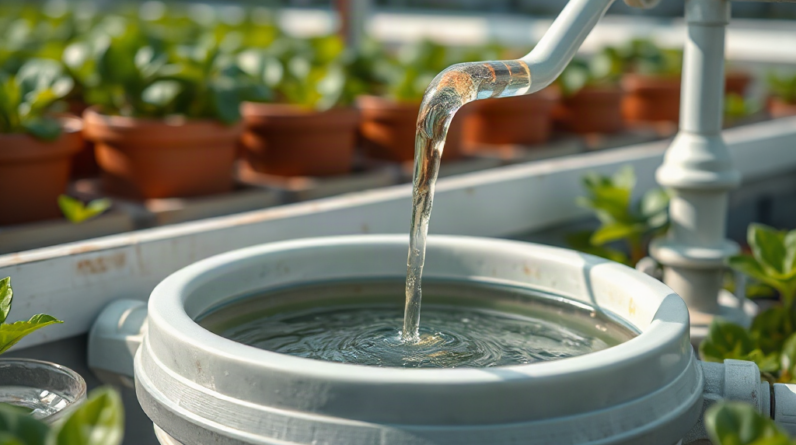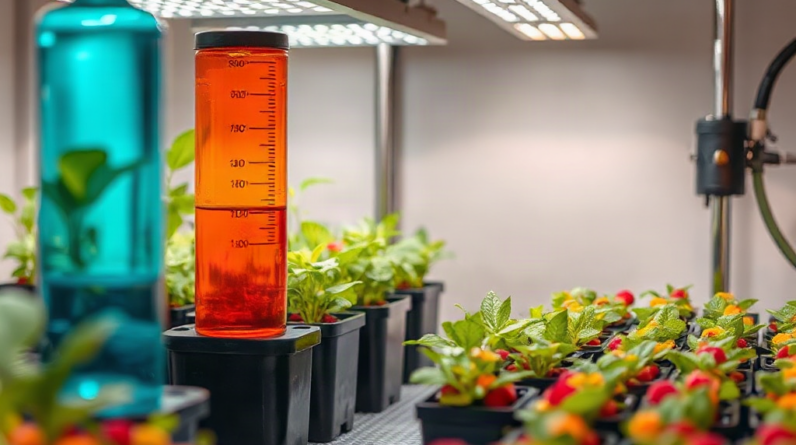
Prevent nutrient depletion in long-term grows by tracking reservoir strength and pH, replacing solution on a planned schedule, topping up with correctly mixed nutrients, and adjusting feed concentration as plant demand changes. Plants remove ions at different rates, while evaporation raises concentration and water-quality issues can interfere with uptake. Measure electrical conductivity and pH at consistent times, record reservoir volume, inspect roots, and compare plant symptoms with the readings before adding more fertilizer. A partial or complete reservoir change is safer than repeatedly correcting an unexplained imbalance, especially after crop transitions. Consistent monitoring protects against hidden shortages, salt accumulation, and nutrient antagonism without forcing excessive fertilizer into the root zone.
Why Long-Term Reservoirs Lose Balance
Nutrient depletion in an extended hydroponic crop is rarely a simple case of every element running out at the same rate. Plants absorb water and mineral ions selectively, so the reservoir composition gradually changes even when its volume appears stable. Leafy greens, fruiting crops, and herbs place different demands on nitrogen, potassium, calcium, magnesium, and trace elements. A solution designed for young lettuce may not suit a mature tomato after flowering begins.
Evaporation creates a second source of confusion. If water leaves the reservoir faster than nutrients do, EC can rise while the crop is still showing deficiency-like symptoms. Conversely, vigorous transpiration can remove water and nutrients together, causing both volume and feed strength to fall. A reservoir that receives frequent plain-water top-offs may eventually become dilute, while one topped off only with concentrated fertilizer may accumulate salts that roots cannot use efficiently.
Water quality also affects the starting point. Hard source water may contribute calcium and magnesium but can push pH upward or reduce the useful space for supplemental minerals. Very soft or filtered water may require a different base nutrient approach. Organic debris, warm solution, inadequate aeration, and damaged roots can further reduce uptake, making a nutrient problem look larger than the actual shortage.
A useful distinction is between depletion and imbalance. Depletion means available nutrients have been consumed or diluted. Imbalance means some ions remain while others are disproportionately low, unavailable, or antagonized. Adding a general-strength nutrient mix to either situation can worsen the mismatch. Before changing the recipe, compare current EC and pH with the crop’s intended range, note recent top-ups, and inspect whether new growth or older leaves show the problem.
For example, a mature basil crop may consume solution quickly during warm, bright conditions. If the grower replaces every lost gallon with plain water, EC can drift below the crop’s working range. In a different system, a small reservoir with heavy fruiting demand may receive repeated nutrient top-offs and develop rising EC, even though lower leaves look pale because roots are stressed. The corrective choice is different in each case, which is why a logbook is more useful than a fixed calendar alone.
Monitoring EC, pH, Water Volume, And Plant Demand
Consistent measurements turn a hidden nutrient drift into a manageable trend. Electrical conductivity indicates the total concentration of conductive dissolved salts, but it does not identify which element is missing. pH indicates the chemical environment around the roots and affects the availability of several minerals. Neither reading replaces observation, yet together they reveal whether a feed change is moving the reservoir in the intended direction.
Measure after the solution has circulated and mixed, rather than immediately after adding concentrate. Use the same sampling location and roughly the same point in the light cycle so temperature and plant activity do not make the record difficult to compare. Calibrate meters according to their instructions, keep probes clean, and verify that a suspicious reading is not caused by a low battery, dried probe, or temperature issue.
Record four practical observations: reservoir volume, EC, pH, and the amount and type of water or nutrient solution added. Add a note about plant age, lighting changes, pruning, flowering, temperature, and visible symptoms. After several days, the direction of change becomes more informative than a single number. Falling EC with stable water volume may indicate active nutrient uptake or dilution. Rising EC while volume falls may indicate water loss outpacing ion uptake. A sudden pH shift may point to changing uptake, poor mixing, root trouble, or an overly aggressive adjustment.
Plant demand should guide the measurement schedule. A small, heavily planted reservoir deserves more frequent checks than a lightly stocked system with a large solution volume. Check after major events such as transplanting, a sharp increase in light intensity, the beginning of fruit set, or a substantial pruning session. The objective is not constant intervention; it is early detection before a gradual drift becomes visible damage.
Do not treat the manufacturer’s EC target as a universal command. The appropriate concentration depends on crop, cultivar, growth stage, water composition, temperature, light, and system design. A beginner may be safer using a conservative concentration and watching new growth, while an experienced grower with reliable records can make smaller stage-specific adjustments. Chasing a target after every reading is a common mistake: repeated additions can create oscillation, where EC swings high and low without giving roots a stable environment.
- Before topping up: measure EC, pH, temperature, and volume.
- After mixing: circulate fully, recheck, and record the change.
- When readings conflict with symptoms: inspect roots, airflow, light, and water quality before increasing feed.
Linking measurements with observations makes how to prevent nutrient depletion in long-term grows a process of controlled adjustment rather than guesswork.
A Practical Reservoir Replenishment Routine
Replenishment works best when it accounts for both water loss and nutrient removal. Start by measuring the reservoir before adding anything. If EC is below the crop’s established working range and the solution has no sign of salt stress, a properly diluted nutrient top-up may be appropriate. If EC is already high, add plain water gradually, circulate, and recheck rather than adding more fertilizer. If the reading has become unpredictable or the crop has moved into a new growth phase, a planned reservoir change is often more dependable than endless small corrections.
A complete change resets the known composition, but it also discards usable solution and may shock plants if the new feed differs sharply. A partial change uses fewer inputs and can soften an imbalance, yet it may leave behind excessive salts or an unsuitable ratio. Choose the smaller intervention when readings are stable and the issue is clearly dilution or concentration. Choose a fuller reset when the reservoir has been repeatedly adjusted, pH is difficult to stabilize, symptoms are spreading, or the crop has changed from vegetative growth to heavy fruiting.
Mix concentrates separately in water according to the product instructions. Never combine undiluted concentrates together, because incompatible ingredients can precipitate before they reach the reservoir. Add the components in the recommended order, circulate thoroughly, and then adjust pH only after EC is within the intended range. Allowing the solution to mix before judging the result prevents a concentrated pocket from reaching the roots.
Reservoir size creates a practical tradeoff. A larger volume changes more slowly and gives the grower more time to respond, but it requires more water, nutrients, and cleaning effort. A small reservoir is economical and responsive, yet a hot room or actively transpiring crop can shift its chemistry quickly. In a compact deep-water culture setup, checking morning and evening during a rapid growth surge may be justified. In a larger recirculating system, scheduled checks combined with volume tracking may provide sufficient control.
Top-off water should match the system’s needs rather than follow a rigid rule. Plain water is useful when evaporation has concentrated the reservoir. Nutrient solution is useful when the crop is removing ions faster than water. Some growers use a measured blend based on the reservoir reading; others drain and remix on a regular interval because it is easier to reproduce. The more complex approach can save inputs, but only if measurements are reliable. A simple full remix is often the better choice for a new grower or an unexplained drift.
After any adjustment, look for a stable trend rather than an instant visual recovery. New growth should develop without the problem spreading, pH should remain reasonably steady, and root surfaces should stay clean and well oxygenated. Older damaged leaves may not recover, so judging success solely by their appearance can lead to unnecessary feeding.
Recognizing Depletion Without Overcorrecting
Visual symptoms can suggest a shortage, but they do not prove that the reservoir lacks that specific element. Pale older leaves may be associated with inadequate nitrogen, while distorted new growth can involve calcium availability, root stress, pH drift, or environmental strain. Interveinal yellowing may point toward magnesium or iron-related availability problems, yet the location and age of affected leaves matter. Treating every yellow leaf with more fertilizer is one of the fastest ways to convert uncertainty into salt buildup.
Use a sequence that separates concentration problems from uptake problems. First check EC and pH. Next examine whether the symptom appears on old or new growth and whether it is uniform across the crop. Then inspect roots for browning, slime, odor, poor oxygenation, or mechanical damage. Review recent changes in temperature, lighting, reservoir level, pruning, and water source. If several variables changed at once, restore stable conditions before making multiple nutrient additions.
A deficiency caused by low concentration often improves in new growth after the feed is corrected, while old damaged tissue remains marked. An availability problem may show little response despite a higher EC, especially if pH is outside the crop’s workable range. Salt stress can produce curled margins, stalled growth, and root injury even though the meter shows a strong solution. These patterns explain why a blind “increase everything” response often fails.
Consider a flowering pepper whose newest leaves become pale while EC is already elevated. Adding more complete fertilizer may increase osmotic stress rather than supply the unavailable element. A better investigation includes pH, root condition, source-water alkalinity, and whether the formula suits fruiting demand. By contrast, a fast-growing lettuce crop with falling EC and abundant healthy roots may need a modestly stronger replenishment mix or more frequent reservoir renewal.
When a specific correction is warranted, change one factor at a time and record the dose. Avoid stacking a calcium supplement, a micronutrient product, and a stronger base mix in the same adjustment unless the formulation calls for it. Separate changes make cause and effect easier to evaluate and reduce the risk of antagonism. If symptoms are severe, spreading, or accompanied by root decline, resetting the solution and addressing the environment may be safer than trying to rescue the original chemistry.
Crop Transitions, Root Health, And System Hygiene
Long-term nutrient management becomes easier when the reservoir is treated as part of a living system rather than a permanent container of fertilizer. Crop transitions are natural reset points. A young vegetative crop, a mature fruiting crop, and a replacement crop do not draw minerals in the same proportions. When plants are removed, roots decay, or a new crop is added, the old solution may no longer represent the current demand.
At a transition, remove plant debris, inspect emitters or air stones, clean accessible surfaces, and prepare a fresh solution when the prior crop has heavily altered the reservoir. This is especially useful in recirculating systems where accumulated organic matter can affect odor, oxygen transfer, and meter interpretation. Cleaning is not a substitute for balanced nutrition, but poor hygiene can make nutrient corrections ineffective by damaging roots or limiting uptake.
Root health changes the meaning of every feed reading. Healthy roots generally remain firm, light-colored, and free of foul odor, although appearance varies by system and nutrient formula. Brown or slimy roots, declining oxygenation, excessive heat, and stagnant flow can prevent plants from using nutrients that are present. Raising EC under those conditions adds pressure without fixing the bottleneck. Improve aeration, circulation, temperature control, and sanitation before assuming the crop needs stronger feed.
System design also determines how much management is practical. A drain-to-waste arrangement can deliver a fresh solution frequently but uses more water and fertilizer. A recirculating system conserves inputs yet requires closer attention to selective uptake and accumulation. Passive systems may need fewer moving parts but can respond more slowly to a changing root zone. The best routine is the one that the grower can measure and repeat accurately; an elaborate schedule that is skipped is less useful than a modest, documented routine.
Use a transition checklist when changing crops or growth stages:
- Measure and record the old solution before disposal or dilution.
- Remove dead roots and plant residue from channels, buckets, pumps, and filters.
- Confirm water quality, aeration, circulation, and meter calibration.
- Mix a feed suited to the new crop stage, then verify EC and pH after circulation.
- Check readings and plant response more often for the first several days.
That routine supports long-term grow nutrient management while limiting waste. It also gives the next crop a known starting point instead of inheriting an unexplained chemical history.
For deeper technical decisions, consult nutrient-manufacturer mixing instructions, water-quality reports from your local supplier, and university extension publications covering hydroponic crop nutrition. These sources can help interpret source-water minerals, crop-stage requirements, and meter readings without replacing observation of the specific system.
Frequently Asked Questions
How often should a long-term hydroponic reservoir be changed?
There is no universal interval. Change it when the crop enters a new demand phase, EC and pH become difficult to manage, repeated top-ups create uncertainty, or symptoms suggest an imbalance. Stable systems can often rely on measured top-ups between planned changes.
Should I top off with water or nutrient solution?
Check EC first. Use water when evaporation has concentrated the solution, and use a correctly diluted nutrient mix when plant uptake has lowered feed strength. Recheck after circulation rather than deciding from reservoir volume alone.
Can a high EC reading mean nutrients are depleted?
Yes, in some situations. Plants may have removed particular ions while less-used salts accumulated, leaving a high total conductivity but an unsuitable nutrient balance. A reservoir reset and water-quality review may be more useful than adding fertilizer.
Does pH adjustment prevent nutrient depletion?
PH adjustment does not replace nutrients, but it can keep existing minerals more available to roots. Correct EC and pH separately, investigate rapid pH swings, and avoid repeated acid or base additions without finding the underlying cause.
What is the first sign that a reservoir routine is failing?
Unexplained swings in EC or pH, faster-than-expected water loss, recurring leaf symptoms, and declining roots are early warning signs. Compare current readings with your log before changing the formula.
Conclusion
Preventing depletion during an extended hydroponic crop depends on knowing what the reservoir is doing, not merely adding fertilizer on a schedule. Track EC, pH, volume, water quality, plant stage, and root condition together. Use plain water when evaporation has concentrated the solution, a measured nutrient top-up when feed strength has fallen, and a reservoir change when repeated corrections have obscured the composition. Treat crop transitions as opportunities to clean the system and establish a fresh baseline. If readings and symptoms disagree, investigate pH, oxygenation, temperature, and roots before increasing concentration. A simple log, calibrated meters, and deliberate adjustments usually provide more reliable control than aggressive feeding or constant correction.