
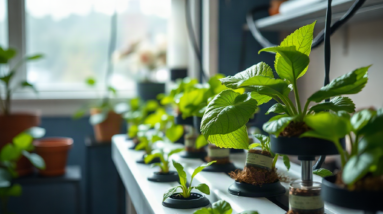
Insurance and Household Safety Concerns for Hydroponic Systems: Coverage Gaps, Fire Risks, and Prevention Steps
Insurance and household safety concerns for hydroponic systems center on whether a home policy covers water damage, electrical fires, equipment losses, and liability arising from an indoor installation. Owners should disclose substantial equipment or structural changes to their insurer, confirm coverage limits and exclusions in writing, and keep pumps, lights…
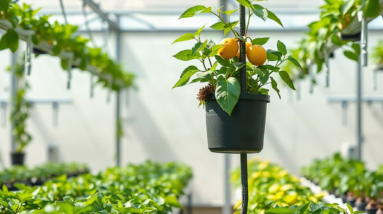
How to Anchor Tall Plants in Hydroponic Gardens: Support Methods by System and Growth Stage
Anchor tall plants in hydroponic gardens by supporting the stem and fruit load from an independent overhead frame, trellis, stake, or cage rather than asking the net pot and roots to hold the plant upright.
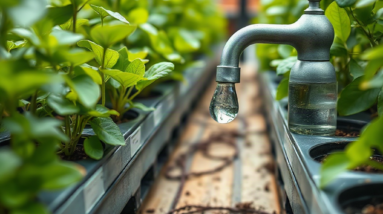
Hydroponic Gardening With Tap Water Precautions (A 6-Point Water Check)
Hydroponic gardening with tap water is usually workable when precautions address disinfectants, mineral content, alkalinity, pH, and contamination before nutrients reach the reservoir. Check the utility’s water-quality report, measure source-water electrical conductivity and pH, and determine whether the supply contains chlorine or longer-lasting chloramine.
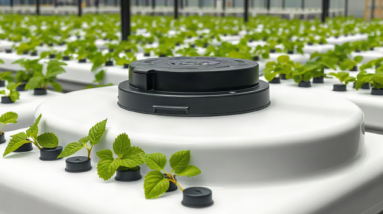
Reservoir Lid Design for Hydroponic Systems: Light Blocking, Access, and Condensation Control
Effective reservoir lid design for hydroponic systems blocks light from the nutrient solution, supports installed equipment, limits contamination, and still allows convenient inspection and cleaning. Use an opaque, moisture-resistant panel with reinforced openings for net pots, tubing, cables, and access ports, leaving enough clearance to prevent pinched air lines and wet electrical connections.
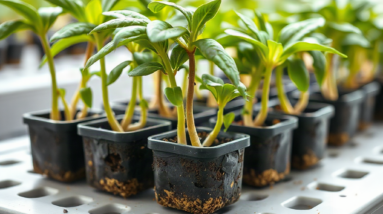
Root Support Options for Hydroponic Seedlings Compared by Material, Moisture, and Transplant Fit
Root support options for hydroponic seedlings should hold the stem upright while keeping young roots moist, oxygenated, and able to enter the final growing system without damage. Starter plugs offer the simplest handling, stone wool provides firm support with predictable moisture retention, and loose media such as coco coir or…
Hydroponic Systems That Work Without Wall Power: Passive Methods, Crop Matches, and Mistakes
Hydroponic systems that work without wall power include the Kratky method, wick-fed containers, gravity-fed drip layouts, and solar-powered pumps with battery storage. Passive designs are usually the simplest because they avoid pump failures, but they require adequate root-zone air, stable nutrient volume, and crops with manageable water demand.
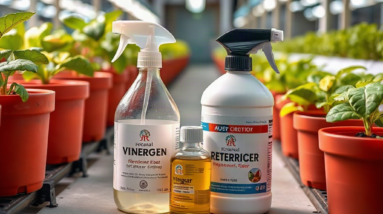
Safe Cleaning Products for Hydroponic Equipment: Methods, Dilution, and Rinse Checklist
Safe cleaning products for hydroponic equipment include mild unscented detergent for routine soil removal, diluted white vinegar or citric acid for mineral deposits, and label-approved hydrogen peroxide or chlorine-based products when disinfection is necessary. Remove plants and nutrient solution before treatment, match the cleaner to the residue, and follow the…
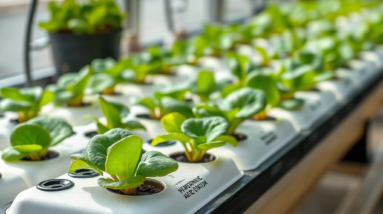
Hydroponic Gardening Startup Costs by Growing Method (Equipment, Tradeoffs, and Budget Examples)
Hydroponic gardening startup costs vary mainly by growing method, with a basic wick setup often costing about $40–$100, small deep-water culture systems about $80–$250, and pump-driven drip, ebb-and-flow, or NFT gardens commonly starting around $150–$500.
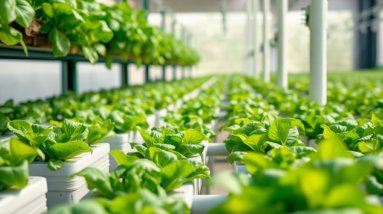
Choosing Hydroponic Crops for Limited Vertical Space: What Fits and Produces Well
For limited vertical space, choose hydroponic crops with compact canopies, shallow root zones, short harvest cycles, and growth habits that tolerate close light placement. Leaf lettuce, arugula, baby kale, basil, chives, and dwarf Asian greens usually use shelf height more efficiently than tomatoes, cucumbers, or full-size leafy plants.
Hydroponic System Backup Plans During Power Outages — Runtime, Aeration, and Recovery Steps
Hydroponic system backup plans during power outages should preserve root-zone oxygen first, maintain essential water circulation second, and restore normal operation without shocking the plants. Size a battery, uninterruptible power supply, or generator from measured pump wattage and required runtime rather than the equipment’s advertised maximum capacity.