
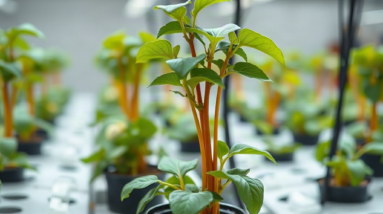
Strengthen Weak Stems in Hydroponic Plants: Causes, Corrections, and Recovery Signs
Strengthen weak stems in hydroponic plants by correcting excessive light distance, stagnant air, rapid growth, root-zone stress, and unbalanced nutrition before relying on physical supports. Place the light at a crop-appropriate intensity, create gentle stem movement with an oscillating fan, maintain steady root oxygenation, and verify nutrient concentration and pH with calibrated meters.
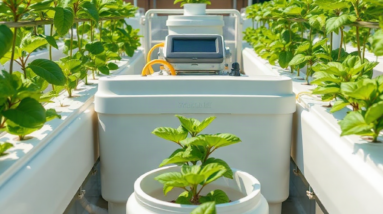
Improve Reservoir Maintenance Access in Hydroponics With a 7-Point Retrofit Plan
Improve reservoir maintenance access in hydroponics by creating unobstructed service space, adding a removable light-blocking lid, and placing pumps, sensors, drains, and sample points where they can be reached without moving plants. Provide enough clearance to lift equipment vertically, route cables through labeled openings, and use an accessible drain valve…
Choosing Crops for Warm Hydroponic Rooms: What Grows Well and What Struggles
Choosing crops for warm hydroponic rooms means favoring plants that maintain leaf growth, flowering, or fruit set despite elevated air temperatures and warm nutrient solution. Basil, Swiss chard, mint, leaf amaranth, cucumbers, peppers, and compact eggplants are usually stronger candidates than cool-season lettuce, spinach, cilantro, or peas.
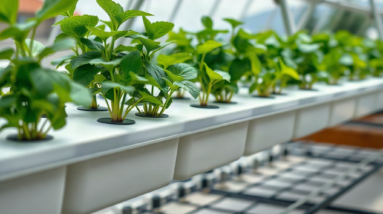
Assemble a First Hydroponic System in Sequence—An 4-Step Build Checklist
Assemble a first hydroponic system in sequence by positioning the reservoir, installing the grow tray or channels, connecting the pump and return line, adding aeration, checking for leaks, mixing nutrients, adjusting pH, and placing established seedlings only after a water-only test.
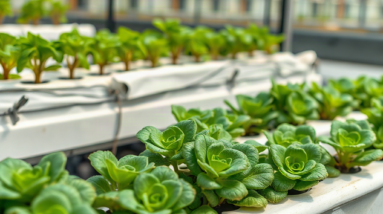
How to Label Hydroponic Reservoirs and Plantings With a Traceable ID System
Label hydroponic reservoirs and plantings by assigning each reservoir a permanent ID and each crop group a linked planting ID, then recording the cultivar, sowing or transplant date, nutrient batch, and expected harvest window. Put water-resistant labels where they remain readable without opening lids or disturbing roots.
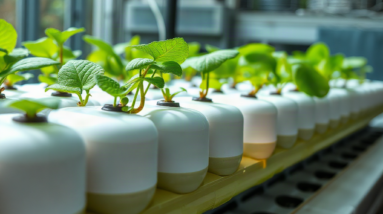
Hydroponic Gardening Water Loss From Evaporation: Causes, Measurement, and Control Methods
Hydroponic gardening water loss from evaporation is controlled most effectively by covering exposed nutrient solution, limiting unnecessary airflow across the reservoir, moderating solution temperature, and measuring daily level changes. Evaporation removes water but leaves dissolved fertilizer behind, so electrical conductivity can rise even when plants have not consumed more nutrients.
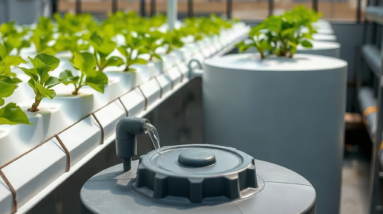
Hydroponic System Overflow Prevention Around Reservoirs — Safeguards, Failure Points, and Response Steps
Hydroponic system overflow prevention around reservoirs depends on controlling both unintended inflow and blocked return flow before nutrient solution reaches the rim. Set a verified maximum fill level, preserve enough empty reservoir volume for drain-back, secure return lines against roots and debris, and place float valves where turbulence cannot trigger erratic filling.
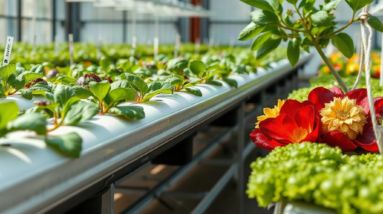
Hydroponic Gardening Harvest Planning for Continuous Supply: A Week-by-Week Crop Rotation Plan
A continuous hydroponic harvest comes from dividing the growing area into recurring sowing, transplanting, and picking slots rather than planting every site at once. Set a weekly consumption target, work backward from each crop’s usable harvest window, and start small batches at fixed intervals.
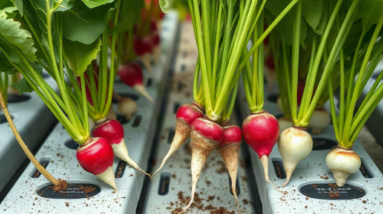
Choose Edible Hydroponic Roots and Shoots by Crop, Space, and Harvest Stage
Choose edible hydroponic roots and shoots by matching each crop’s harvest stage to the system depth, growing medium, and available light. Radishes, baby turnips, pea shoots, sunflower shoots, and young beet greens are practical options, while full-size carrots and storage roots usually need deeper, carefully managed media.
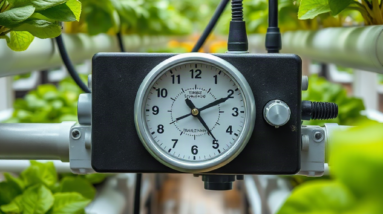
Hydroponic System Timers for Feeding Schedules — Cycle Lengths by Growing Method
Hydroponic system timers for feeding schedules should be set according to the growing method, root-zone moisture, pump flow, and the crop’s stage rather than a universal hourly formula. Drip systems usually need short, repeated irrigations, while ebb-and-flow tables require enough runtime to flood and drain the tray completely; NFT pumps commonly run continuously.