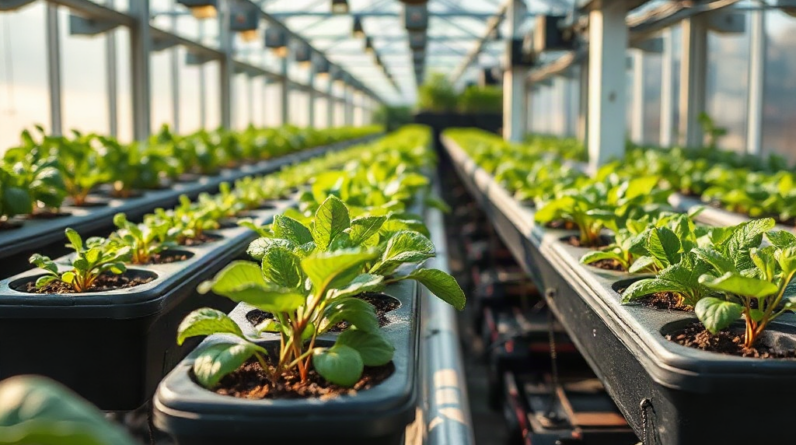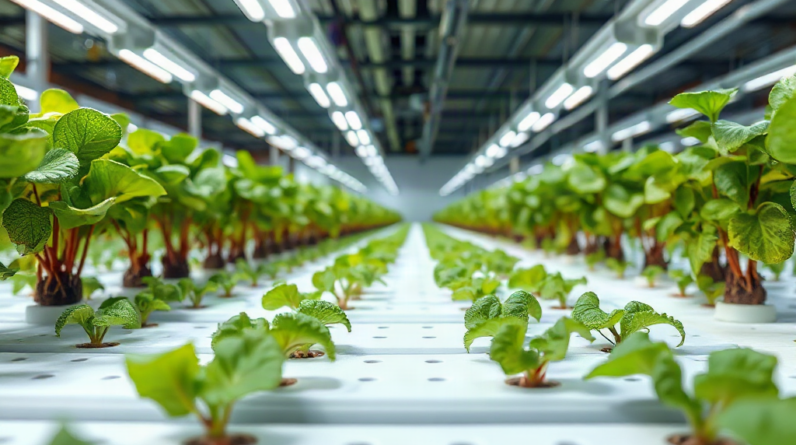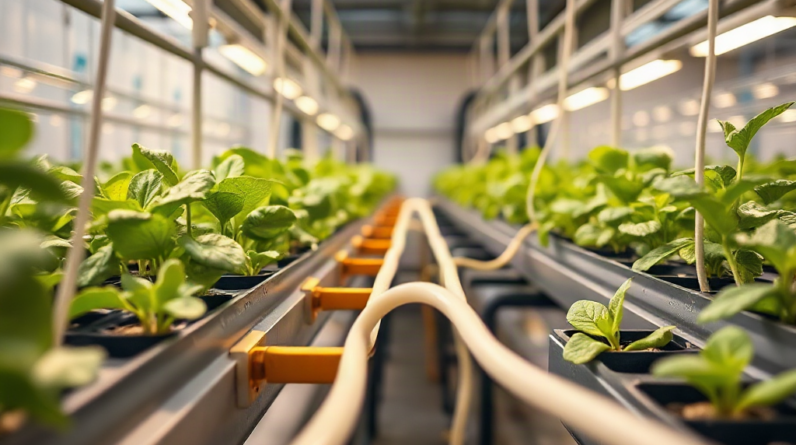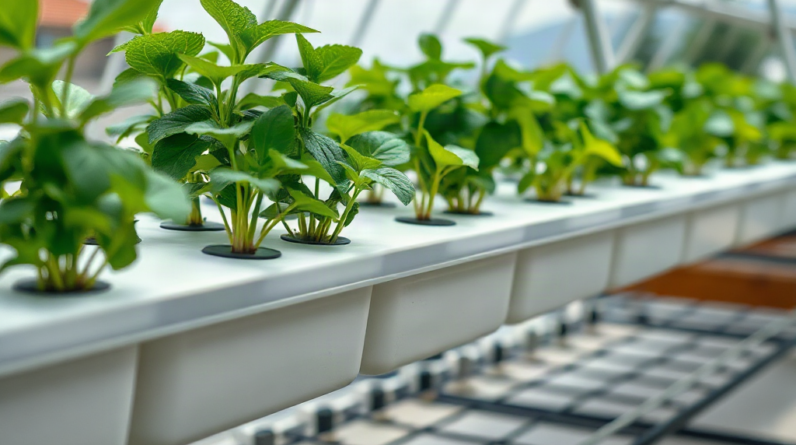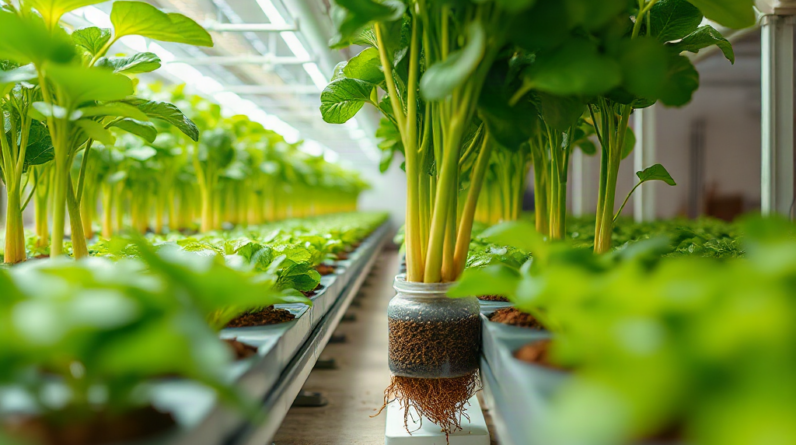
How to optimize growth rates in hydroponic systems depends on matching light intensity, climate, root-zone oxygen, and crop-specific nutrition rather than simply adding fertilizer. Measure pH and electrical conductivity consistently, keep the solution temperature stable, and verify that roots receive enough oxygen through appropriate aeration or flow. Adjust lighting height and duration according to plant response, while managing humidity and air movement so transpiration can carry water and minerals to new growth. Faster growth usually comes from correcting the limiting condition first; excess nutrients, heat, weak airflow, or crowded roots can slow plants even when other settings look ideal. Change one variable at a time and record results before making another adjustment.
Find the Growth-Limiting Condition First
Growth rate in a hydroponic system is usually controlled by the weakest part of the environment. A plant with adequate lighting may still grow slowly if its roots are oxygen-starved, while a well-aerated reservoir cannot compensate for insufficient light or an unsuitable temperature. Before changing several settings, identify whether the restriction appears above the media, around the roots, or in the reservoir.
New leaves provide useful clues. Long spaces between leaves and thin stems often point toward inadequate light, whereas curled edges, bleached patches, or unusually warm foliage can indicate excessive light or heat. Slow expansion with dark, heavy-looking roots suggests a different problem from pale new leaves caused by an unavailable nutrient. The distinction matters because adding fertilizer to a light or oxygen problem can increase stress rather than growth.
Record plant variety, age, lighting schedule, room temperature, relative humidity, pH, electrical conductivity, and reservoir temperature. A single reading is less useful than a pattern. For example, a reservoir may test correctly in the morning but become concentrated after a warm day as plants and evaporation remove water. Comparing measurements at consistent times makes the cause easier to isolate.
A practical diagnostic order is to check equipment operation, root appearance, solution temperature, pH, EC, light coverage, and airflow. A failed air pump, blocked emitter, or dry media zone deserves attention before fine-tuning a nutrient formula. The common mistake is treating a target number as proof that the system is healthy; a meter reading cannot reveal a clogged line or poor light distribution by itself.
Tune Light and Climate Together
Light supplies the energy for photosynthesis, but plant growth depends on how light interacts with temperature, humidity, and carbon dioxide exchange. Increasing lamp intensity without improving heat removal can raise leaf temperature and water demand faster than the roots can respond. The result may be wilting, curled margins, or stalled growth despite a brighter canopy.
Set the fixture height and schedule according to the crop and its developmental stage, then observe the newest growth for several days. Seedlings generally need gentler exposure than established plants, while fruiting crops often require more energy than leafy greens. A light meter can improve consistency, but even without one, uneven stretching on the far side of a plant or bleaching directly beneath a fixture shows that coverage needs attention.
Air movement should create gentle leaf movement rather than a constant harsh blast. Moving air reduces stagnant pockets and helps leaves exchange moisture with the room, but excessive airflow can increase transpiration and produce dry edges when the root system cannot replace lost water. Humidity control works the same way: a very humid room may slow transpiration and encourage disease pressure, while very dry air can make a strong lamp difficult to tolerate.
Consider a small lettuce system in a warm indoor room. Lowering the lamp may increase light at the canopy, but if the room already runs hot, raising the fixture slightly and improving exhaust may produce better growth than pursuing maximum intensity. Conversely, a cool room with weak airflow may benefit from stronger circulation before any nutrient adjustment. Prioritize a stable climate over short bursts of intense light, and make changes gradually so the plants have time to respond.
Manage Nutrition, pH, and Solution Strength
Plants need a balanced supply of mineral elements, but faster growth does not come from making the reservoir as strong as possible. Electrical conductivity indicates the total concentration of dissolved ions; it does not confirm that every element is present in the right proportion. A high EC can reflect excessive fertilizer, evaporation, or a formula designed for a different crop stage.
Use a nutrient product according to its label and crop requirements, and mix components in the recommended order. Concentrated products should not be combined together before dilution because incompatible ingredients can precipitate and become unavailable. Measure the source water when possible, since hard water may already contribute calcium and magnesium while very soft or filtered water may require a different approach.
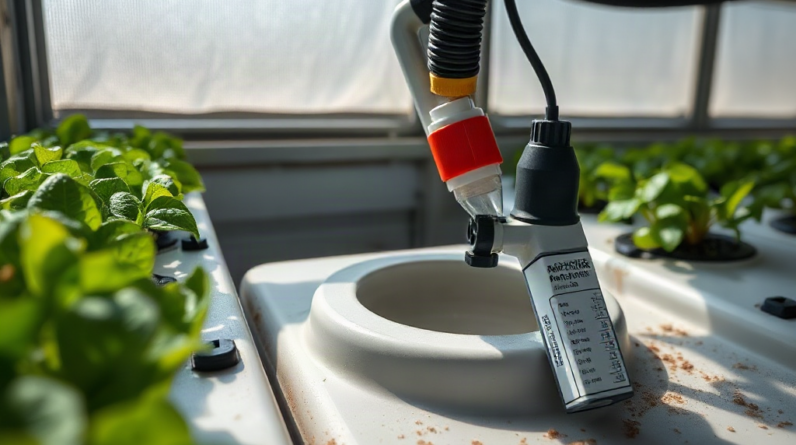
PH affects whether roots can access individual elements. If pH drifts repeatedly, do not keep correcting it without investigating the cause. Rapid plant uptake, fresh water, biological activity, or an incorrectly mixed solution can all contribute. A calibrated meter and clean sample container are more useful than frequent guesses. Adjust in small increments, circulate the reservoir, and retest rather than making a large correction that sends the solution past the intended range.
Reservoir behavior also reveals plant demand. If EC rises while the water level falls, the system is losing more water than fertilizer, often because of warm air or strong light. If EC falls quickly, plants may be taking up minerals rapidly or the solution may be diluted by top-off water. Replacing part of the solution on a planned schedule can reduce imbalance, but a complete change may be preferable when the reservoir has been repeatedly overcorrected.
Compare a mild leafy-green formula with a heavier fruiting formula rather than applying one recipe to every crop. Lettuce, basil, tomatoes, and peppers differ in size, duration, and mineral demand. The mistake to avoid is copying a high-performing setting from another crop or system without accounting for water source, lighting, plant load, and growth stage. Nutrient management should support the observed crop response, not replace observation.
Protect Root Function and Use a Measured Adjustment Plan
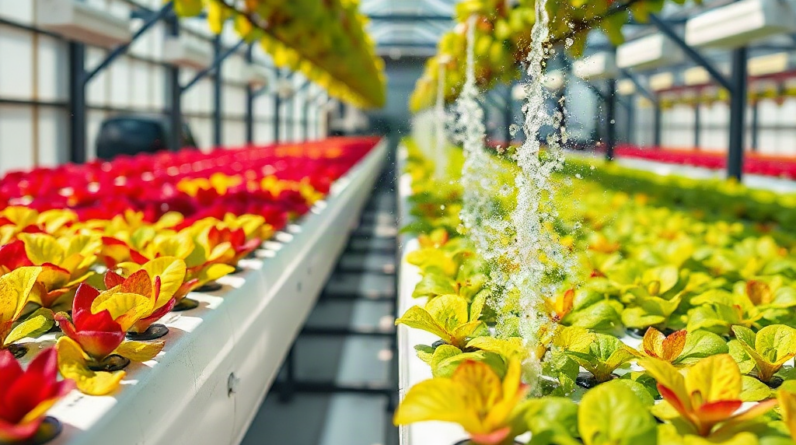
Healthy roots convert a well-managed reservoir into usable growth. They need continuous access to water, minerals, and oxygen, with enough circulation to prevent stagnant zones. In deep-water culture, reliable aeration is central; in drip or ebb-and-flow systems, delivery timing and drainage determine whether roots receive both moisture and air. A constantly saturated, poorly oxygenated root zone can slow growth even when pH and EC look acceptable.
Inspect roots during routine maintenance. Cream or light-colored roots with a clean smell are generally less concerning than brown, slimy roots accompanied by an unpleasant odor. Check that air stones are producing fine bubbles, pumps are not losing flow, emitters are not blocked, and channels drain as intended. Media should remain appropriately moist without creating a permanently waterlogged crown.
System design creates tradeoffs. A high-flow setup can distribute nutrients evenly but may require more plumbing maintenance and secure fittings. A simple reservoir with strong aeration is easier to inspect, yet it may provide less flexibility for crops with different irrigation preferences. Choose the approach that matches the crop and the grower’s ability to monitor it; a simpler system maintained consistently often outperforms a complex system that is checked irregularly.
Use a controlled adjustment plan after correcting an obvious fault. First document the baseline, then change one meaningful variable, such as improving aeration or raising a light that is causing heat stress. Watch new growth rather than expecting damaged leaves to repair themselves. Signs of progress include steady leaf expansion, stronger stems, stable water use, and roots that remain clean and well distributed. Signs of failure include worsening tip damage, persistent wilting, repeated pH swings, or reservoir temperature that climbs during the light period.
- Daily: inspect plants, water level, pump operation, and unusual odors.
- Several times weekly: measure pH and EC consistently and check for leaks or blocked delivery points.
- Weekly: inspect roots and clean accessible equipment before buildup affects flow.
- After every major change: record the adjustment, date, crop stage, and plant response.
Use how to optimize growth rates in hydroponic systems as a monitoring process, not a hunt for a universal setting. The best next step depends on whether the crop is limited by energy capture, water movement, mineral availability, or root respiration. A measured approach also makes it easier to return to the last stable configuration when an experiment performs poorly.
Set Priorities for Consistent, Sustainable Growth
Consistency is often more valuable than chasing the maximum possible rate for a few days. Rapid swings in temperature, solution strength, or irrigation create repeated stress, and stressed plants may spend energy recovering instead of producing leaves, stems, or fruit. Automation can help with timers, alarms, circulation, and environmental control, but it does not remove the need for calibration and inspection.
Prioritize improvements according to risk and leverage. Repair failed circulation before upgrading lights. Stabilize the root zone before increasing fertilizer. Correct severe heat or humidity problems before extending the light schedule. This order protects the crop and prevents an expensive improvement from amplifying a hidden weakness.
Budget also affects the sensible choice. A hobby grower may gain more from a dependable pH meter, a thermometer placed near the roots, and a simple log than from a sophisticated controller. A larger installation may justify sensors and alarms because a missed pump failure can affect many plants quickly. Neither approach is automatically better; the useful equipment is the equipment that produces reliable information and prompts a timely response.
For additional context, compare your observations with hydroponic growth-rate records across varieties and seasons. Crop genetics set a ceiling, and harvest goals determine whether maximum size, rapid turnover, or flavor is the priority. Faster vegetative growth may not produce better fruit quality if the plant is pushed beyond the available light or support structure.
Frequently Asked Questions
What should be checked first when hydroponic plants grow slowly?
Check equipment operation, root appearance, solution temperature, pH, EC, light coverage, and airflow. Correct an obvious mechanical or environmental fault before changing the nutrient formula.
Does increasing fertilizer make plants grow faster?
Not necessarily. Excessive EC can make it harder for roots to take up water and may cause tip burn or stalled growth. Match solution strength to the crop and growth stage.
How does light affect hydroponic growth rate?
Light supplies energy for photosynthesis, but stronger light also increases heat and water demand. Adjust intensity with ventilation, humidity, and root-zone capacity in mind.
Why does pH keep changing in a hydroponic reservoir?
Plant uptake, source water, solution composition, and biological activity can all influence pH. Measure at consistent times, confirm meter calibration, and investigate the pattern instead of repeatedly making large corrections.
What are signs that roots are limiting growth?
Slow new growth, wilting despite adequate water, unpleasant reservoir odor, slimy or dark roots, and poor flow can indicate root-zone trouble. Inspect aeration, drainage, temperature, and delivery lines promptly.
Further Reading
Authoritative Sources
- University of Minnesota Extension: Hydroponic Gardening
extension.umn.eduProvides university-backed guidance on hydroponic system fundamentals, environmental management, and plant care
- Oklahoma State University Extension: Hydroponics
extension.okstate.eduExplains system types, nutrient management, and practical growing considerations for soilless production
Conclusion
Optimizing hydroponic growth rates is a process of removing the strongest limitation, not maximizing every setting. Reliable circulation and oxygen, suitable light, a stable climate, and crop-appropriate nutrition work together; a weakness in one area can cancel gains elsewhere. Begin with a written baseline, inspect the roots and equipment, and use consistent pH, EC, and temperature readings to distinguish real trends from guesswork. Change one variable at a time and judge success through new growth, water use, root condition, and plant stability. Under tight budgets, measurement and dependable maintenance usually deserve priority over advanced hardware. Once the system is stable, refine light and nutrition gradually for the specific crop rather than copying settings from an unrelated setup.