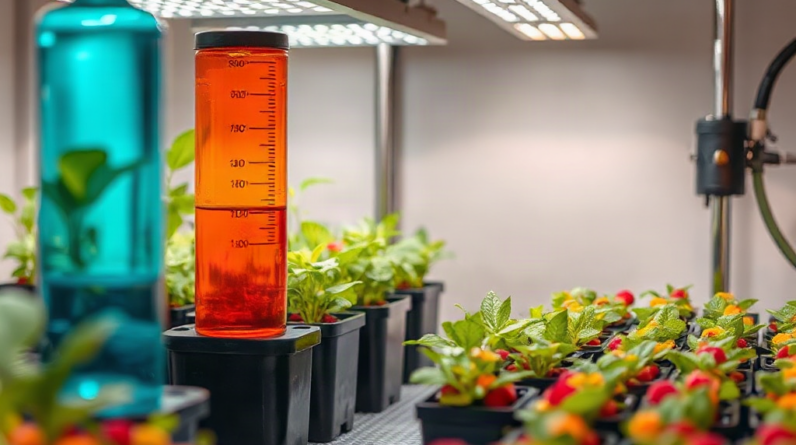
Verify food-grade hydroponic nutrients by checking the product label, safety documentation, manufacturer traceability, and crop-use instructions rather than relying on the phrase “food-grade” alone. Confirm that the formulation is intended for edible crops, identify every ingredient and micronutrient source, request a current certificate of analysis when available, and inspect the lot number, seal, and storage condition. Food-grade claims do not automatically prove that a product is contaminant-free, certified organic, or suitable for every crop. Keep purchase records and discontinue use if the container lacks a complete label, shows damage, or comes from an unverifiable seller.
What Food-Grade Nutrients Actually Mean
“Food-grade” is useful only when you know exactly what the manufacturer is claiming. In hydroponics, a nutrient product may be made from materials suitable for contact with food, formulated for edible plants, manufactured under a recognized quality system, or simply marketed with reassuring language. Those descriptions are not interchangeable. A bottle that says it is safe for vegetables is not necessarily certified organic, tested for every possible contaminant, or approved for direct use on harvested produce.
The first distinction is between intended use and material quality. A mineral salt can be chemically suitable for plant nutrition while still requiring manufacturing controls to limit unwanted impurities. Conversely, a product designed for food processing may not provide the correct balance of nitrogen, potassium, calcium, magnesium, and trace elements for a recirculating nutrient solution. Check whether the product is explicitly labeled for hydroponic cultivation of edible crops, not merely for gardening or ornamental plants.
Consider two products with similar nutrient numbers. Product A lists complete ingredients, dilution instructions, a lot code, manufacturer contact details, and crop-use directions. Product B lists only “proprietary mineral blend” and a general promise of purity. Product A gives you a basis for verification; Product B leaves important questions unanswered even if both appear professionally packaged.
Do not treat the term as a guarantee that plants will be safe under every growing condition. Water quality, dirty reservoirs, unsuitable plumbing, pesticide drift, and poor harvest hygiene can introduce hazards after the nutrient is mixed. Readers comparing products can also review How to verify food-grade hydroponic nutrients alongside their system sanitation and harvest procedures.
How to Read Labels and Safety Documents
A reliable label should let you identify the product, use it correctly, and contact the responsible manufacturer. Look for a complete guaranteed analysis showing the declared nutrients and their sources, directions for mixing, storage instructions, net contents, batch or lot identification, and a manufacturer or distributor address. Missing information is more concerning than a plain design or an unfamiliar brand name.
Ingredient transparency matters because nutrient concentrates can contain more than the headline N-P-K numbers. Calcium, magnesium, iron, boron, copper, manganese, molybdenum, and zinc may be listed separately, while chelating agents or pH-related additives may appear elsewhere in the documentation. A product that hides all composition behind “proprietary” wording is difficult to assess for edible-crop use, compatibility, or accidental overapplication.
Ask the supplier for a current certificate of analysis or comparable batch documentation when the product is marketed for food production. A useful document should identify the tested lot, test date, relevant specifications, and the testing laboratory or quality-control process. It should not be treated as proof of every possible safety attribute; a document for nutrient concentration may not cover microbial status or heavy-metal screening.
Safety data sheets are also worth reviewing, but they have a specific purpose. They describe hazards associated with handling, storage, spills, and exposure. They do not automatically certify a nutrient solution for edible crop production. Likewise, an organic input label addresses a separate question from food-grade suitability. When comparing a product with a transparent label to one supported only by broad marketing claims, prioritize documentation over appearance.
- Confirm edible-crop or hydroponic use on the label.
- Match the lot number on the container to any analysis or quality record.
- Check dilution directions against the crop and system manufacturer’s instructions.
- Save the label and documentation with the purchase record.
Checking Traceability, Testing, and Product Condition
Traceability is the practical test of whether a nutrient claim can be investigated. A legitimate product should have a stable manufacturer identity, a lot or batch code, an unbroken seal, and a route of purchase that can be documented. Retailers, commercial suppliers, and established manufacturers are usually easier to contact than anonymous marketplace listings where containers may be old, diluted, relabeled, or stored in unsuitable conditions.
Testing deserves careful interpretation. Heavy metals are a particular concern because some mineral sources can carry impurities, and plants may take up certain elements depending on the crop and growing conditions. Ask whether the manufacturer routinely screens finished products or raw materials and whether results are tied to the lot you purchased. An assurance that a product is “pure” without a specification, test scope, or responsible company behind it provides little decision value.
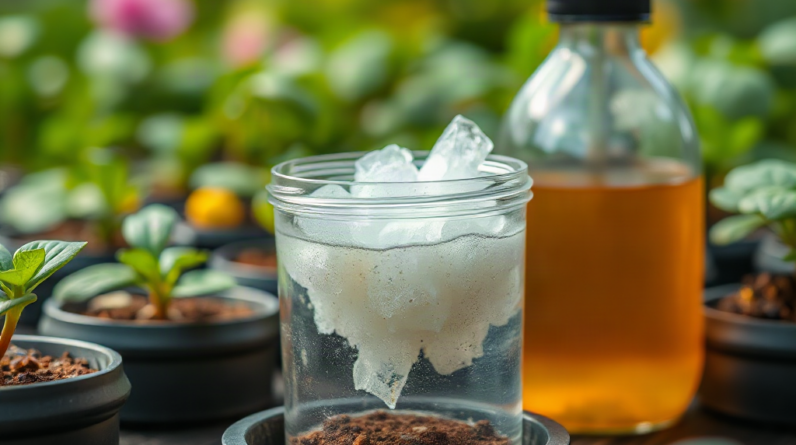
Physical inspection can reveal problems before a concentrate enters the reservoir. Reject or quarantine a container with a broken seal, leaking cap, swollen bottle, missing label, altered lot code, unusual sediment, or a strong odor that differs from the product’s normal description. Crystallization or separation does not always mean contamination; some concentrates settle or precipitate when exposed to cold, heat, or incompatible storage. Do not improvise by shaking together separated components unless the manufacturer permits it.
Suppose a grower receives a nutrient bottle from an online seller with no lot number and a label printed in a different style from the manufacturer’s current packaging. The safest next action is not to test it casually on lettuce. Photograph the container, contact the manufacturer, and request confirmation of the label and lot. If authenticity cannot be established, replacement is cheaper and more defensible than risking an entire edible crop.
Keep a simple record containing the supplier, purchase date, product name, lot code, mixing rate, water source, and any unusual reservoir response. Records help separate a nutrient problem from pH drift, contaminated water, clogged emitters, or a sanitation failure. They also make a supplier’s quality claim useful over time rather than treating it as a one-time impression.
Using Verified Nutrients Without Misreading Crop Safety
Verification does not end when a product passes a label check. Correct handling determines whether the nutrient is used within the conditions the manufacturer described. Use clean measuring equipment, potable starting water, and a reservoir that has been washed and rinsed appropriately. Add concentrates according to the product directions, never mix concentrated components together unless the label specifically allows it, and monitor electrical conductivity and pH after dilution.
Crop suitability also matters. A formulation designed for leafy greens may not provide the same balance needed by fruiting tomatoes, peppers, or cucumbers. A nutrient can be authentic and well documented yet produce poor results when applied at the wrong strength or growth stage. Excess concentration may cause root stress and leaf-edge damage; insufficient calcium or an unstable pH may create symptoms that are mistaken for contamination. Plant symptoms are warning signals, not laboratory proof of nutrient quality.
Compare a simple home verification approach with a commercial one. A home grower may reasonably prioritize a complete label, traceable seller, lot documentation, clean storage, and conservative use on a small crop. A commercial operation supplying customers may need a more formal supplier-approval process, retained records, water testing, and independent laboratory work appropriate to its food-safety plan. The correct level of evidence depends on exposure, scale, and the consequences of a failed batch.
Stop using a product when the label conflicts with the manufacturer’s website, the lot cannot be verified, the solution develops an unexplained reaction, or several plants show symptoms after a documented change in fertilizer. First isolate variables: compare source water, mixing order, concentration, reservoir temperature, and sanitation records. Do not assume that yellow leaves or algae prove the nutrient is unsafe. If an actual contamination concern exists, avoid consuming the affected crop and seek advice from a qualified agricultural or food-safety professional.
For related decisions, How to verify food-grade hydroponic nutrients should be considered together with safe system materials and post-harvest handling. Nutrient verification reduces one risk category; it does not replace clean harvest tools, suitable water, or controlled storage.
Frequently Asked Questions
Does food-grade mean a nutrient is safe for every edible crop?
No. Confirm that the formulation is intended for hydroponic edible crops and follow crop-specific dilution guidance. The term alone does not establish suitability for every plant or system.
Should I ask for a certificate of analysis?
Yes, particularly for commercial production or products with limited label information. Check that the document identifies the relevant lot and explains what was tested.
Is an organic nutrient automatically food-grade?
No. Organic-input status and food-grade suitability address different claims. Verify both separately if both attributes matter to your operation.
Can I use a nutrient with no lot number?
It is better not to use it on an edible crop until the manufacturer confirms its identity and traceability. A missing lot code prevents meaningful batch verification.
Do plant symptoms prove that nutrients are contaminated?
No. Symptoms may result from concentration, pH, water chemistry, temperature, disease, or root damage. Investigate the growing conditions before drawing a safety conclusion.
Conclusion
Verifying a food-grade hydroponic nutrient means checking more than a reassuring phrase on the front label. Confirm edible-crop intent, inspect the guaranteed analysis and ingredient information, request lot-linked quality records, and buy through a traceable supplier. Store the concentrate correctly, document its use, and distinguish nutrient authenticity from broader food-safety controls such as water quality and harvest sanitation. A cautious home grower can begin with transparent labeling and a small, well-monitored application; a commercial producer may need formal supplier approval and additional testing. When identity, storage history, or documentation remains unclear, replacing the product is the sensible choice. Reliable records and conservative decisions protect both the crop and the people who may eat it.