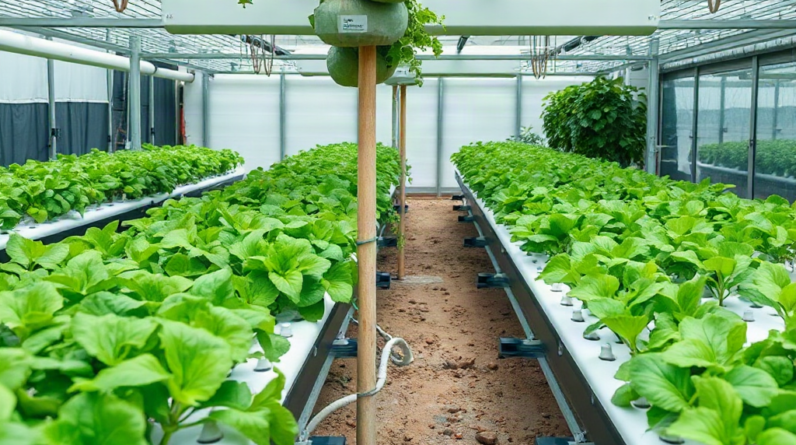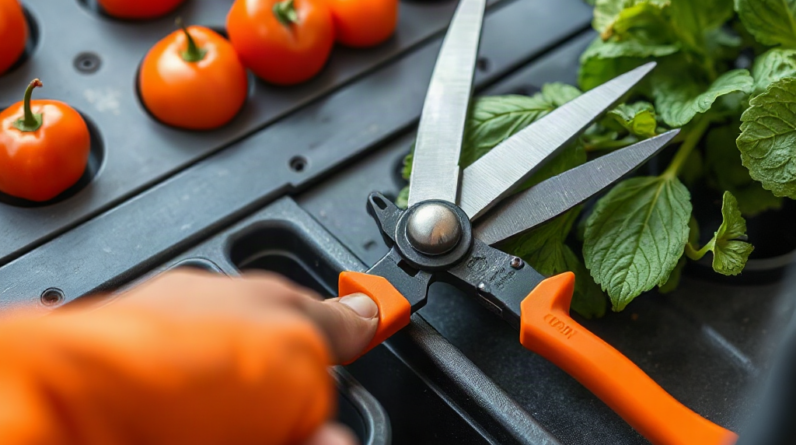
Hydroponic harvest tools for clean cuts should combine a sharp bypass blade, a comfortable grip, and a sanitation routine matched to the crop and harvest pace. Fine-tip snips suit basil, lettuce, and dense herb growth, while bypass pruners handle thicker stems without crushing nearby tissue. Wipe blades between plants, remove sap or plant debris before disinfecting, and cut just above a node or selected crown point rather than tearing stems by hand. Harvesting when foliage is dry reduces slipping and contamination risk, but delicate greens still need gentle handling. Replace or sharpen tools when they drag, bend stems, or leave ragged edges that dry slowly and invite decay.
Match the Blade to the Crop
The best harvest tool depends on stem thickness, plant spacing, and whether the crop will regrow. Small bypass snips are usually the most precise choice for basil tips, parsley, cilantro, microgreens, and leafy greens because their narrow blades can reach between petioles without pulling surrounding foliage. Bypass blades pass one sharpened edge past a supporting edge, producing a shearing action rather than a crushing squeeze.
Thicker stems call for compact bypass pruners with stronger handles and more clearance. Fruiting crops such as tomatoes, peppers, and cucumbers may need a tool that can remove a mature truss stem or tough lateral without forcing the wrist. Anvil-style pruners can cut firm material, but their crushing action is less desirable for tender harvest points and soft stems. Use them only when the crop and cut location tolerate compression.
Scissors are convenient for a tray of baby greens, yet ordinary household scissors often have wide tips, loose pivots, or blades that collect plant residue. They may work for a quick cut, but purpose-built snips offer better visibility in crowded canopies. For a small indoor garden, a fine-tip snip, a medium bypass pruner, and a clean collection tray cover most needs. Readers comparing equipment can also review Hydroponic harvest tools for clean cuts alongside their crop plan rather than buying the largest pruner available.
Grip and access matter as much as blade design. A spring-loaded snip reduces repeated opening by hand, while a locking mechanism protects the blade during storage. Very small handles may feel precise but become tiring during a large harvest; oversized handles can damage delicate stems because they encourage excess force. Choose the smallest tool that cuts the plant material cleanly without twisting.
Why Sharp Cuts Matter in Hydroponic Plants
A sharp blade separates plant tissue with less compression and tearing. A ragged cut leaves crushed fibers around the wound, which can dry unevenly and retain moisture or debris. In a hydroponic environment, cut material may fall into channels, rafts, gutters, or reservoirs, where organic residue can interfere with cleanliness and inspection. The tool does not replace good crop management, but it can reduce avoidable physical damage during harvest.
Cut location also determines the plant’s next response. For cut-and-come-again lettuce, removing outer leaves while protecting the crown preserves the growing point. For basil, cutting above a healthy pair of leaves encourages branching rather than leaving a long bare stem. Herbs harvested for immediate use can tolerate a different cut than a mother plant intended to continue producing. The practical question is not simply whether the blade is sharp; it is whether the cut matches the plant’s growth pattern.
Consider two basil plants harvested with the same tool. One receives a clean cut above a node and remains upright. The other is pulled sideways while the grower tries to cut a thick, woody section with blunt scissors. The second plant may show a split stem, bruised tissue, or a loose crown. A stronger pruner is not automatically the answer if the operator is cutting too low or using a twisting motion.
Inspect the cut surface during a trial harvest. A good cut is generally smooth, with no dangling fibers and little deformation below the blade. If the stem bends before separation, the pivot may be loose, the blade may be dull, or the material may exceed the tool’s capacity. Wiping a blade after a sticky cut is useful, but sharpening or replacing it is the longer-term solution. More details on crop-specific handling can be linked through clean-cut harvest methods for hydroponic crops.
Sanitation, Handling, And Harvest Timing
Clean tools reduce the chance that plant sap, algae, dust, or diseased tissue will be transferred from one plant to another. Cleaning and disinfection are separate actions: a blade covered with residue cannot be disinfected reliably until the residue is removed. Brush away debris, wash the tool according to its material and manufacturer instructions, dry it, and then use an appropriate disinfecting method for the tool and crop operation.
Do not dip a dirty blade straight into a disinfectant and assume the job is complete. Sticky tomato sap and dried plant tissue can shield surfaces, while moisture left on carbon-steel components may encourage rust. Stainless steel is easier to maintain, but it still needs cleaning. Avoid allowing disinfectant to drip into a nutrient reservoir unless the product label and operating procedure specifically support that use; harvest-tool sanitation should not become an accidental water-treatment event.
Harvest timing affects both cut quality and handling losses. Dry foliage is easier to grip and inspect than wet foliage, and a dry cut surface is less likely to be smeared with water and plant residue. Morning may suit some growers because plants are turgid, but the best time depends on the crop, room humidity, lighting schedule, and how quickly produce can be cooled or packed. A grower harvesting lettuce beside an active misting cycle faces a different risk than someone cutting basil after the canopy has dried.
Keep a clean tray or harvest basket close to the cutting point so produce does not touch the floor, reservoir lid, or used media. Remove dropped leaves promptly, especially from channels and moving water paths. When disease is suspected, isolate the plant and use a dedicated tool or sanitize between cuts rather than moving through the crop casually. A simple routine—clean tool, dry crop surface, deliberate cut, clean collection area—usually protects quality better than an expensive tool used carelessly.
A Practical Tool Kit And Cutting Routine
A useful kit has three parts: a precise snip for thin stems, a bypass pruner for heavier growth, and maintenance supplies. Add a small brush, clean cloths, a suitable disinfectant, and a way to keep sharp tools separate from used or wet equipment. A spare snip can be worthwhile in a commercial or high-volume setting because stopping to repair one tool encourages rushed cutting with an unsuitable substitute.
Use this compact sequence before each harvest block:
- Inspect the blade, pivot, spring, and locking catch; reject tools that wobble or leave visible residue.
- Choose the narrowest tool that can cut the stem in one controlled squeeze.
- Position the blade where the crop’s regrowth or final presentation requires it.
- Close the blade fully without twisting, then place the harvest directly into a clean container.
- Remove residue and sanitize whenever moving between plants, varieties, or questionable tissue.
Test the routine on one plant before processing the entire tray. If leaves are torn, stems are flattened, or the tool repeatedly needs a second cut, change the blade or approach before continuing. This is especially useful with mixed plantings, where a snip suitable for lettuce may struggle with woody herb stems.
Budget constraints can be handled through prioritization. Spend first on blade quality, pivot stability, and cleanability; decorative handles and elaborate accessories matter less. A professional-grade pruner may be unnecessary for a countertop herb garden, while a low-cost pair with a rough hinge can become expensive if it damages saleable produce or causes hand fatigue. The right harvest setup is the one that maintains consistent cuts across the actual crop mix.
Common Tool Mistakes And Replacement Signs
The most common mistake is using a blunt blade because it still closes. Cutting ability alone is not enough: a tool can sever a stem while crushing the tissue first. Another mistake is using bypass snips as wire cutters, opening them beyond their design range, or cutting media, labels, and plastic with the same edge used for produce. Those habits nick the blade and introduce residue that is difficult to remove.
Some growers also over-sanitize without maintaining the mechanism. Repeated exposure to moisture or harsh products can affect springs, pivots, coatings, and lubricants. Follow the manufacturer’s care instructions, dry moving parts, and keep any lubricant away from surfaces that contact edible produce. A clean tool that drags because its pivot is corroded is not ready for harvest.
Replace or service a tool when it shows repeated symptoms rather than waiting for total failure. Warning signs include a stem that slips out of the cutting zone, a blade that leaves a folded edge, visible chips, excessive side-to-side movement, rust at the pivot, or hand pressure that has increased noticeably. Sharpenable pruners may be restored, but thin snip blades are often more practical to replace when their geometry has changed.
Do not treat a perfect cut as permission to harvest diseased plants normally. Tool selection cannot compensate for poor airflow, contaminated surfaces, overgrown canopies, or delayed removal of damaged tissue. Clean cuts are one part of a controlled harvest process. Pair them with crop-specific cut points, clean containers, and prompt inspection so a small mechanical problem does not become a wider crop-quality problem.
For additional crop-specific handling and sanitation context, consult university extension publications, food-safety guidance, and the care instructions supplied by the manufacturer of the snips or pruners. These sources are most useful when they address the crop, tool material, and intended post-harvest handling rather than offering a one-size-fits-all cleaning recipe.
Frequently Asked Questions
Are bypass snips better than scissors for hydroponic harvesting?
Usually, bypass snips provide more control around crowded stems and make cleaner cuts. Scissors remain practical for very fine greens if their blades are sharp, clean, and easy to sanitize.
How often should harvest blades be sanitized?
Sanitize before harvest and whenever moving between plants, varieties, or tissue that may be diseased. Clean visible residue first because disinfectant works poorly through sap or plant debris.
Where should basil be cut for continued growth?
For continued branching, cut just above a healthy pair of leaves or node rather than leaving a long bare stem. Avoid damaging the node and nearby leaves with a wide blade.
Can one tool handle every hydroponic crop?
A quality medium bypass pruner can handle many stems, but a fine-tip snip is safer for dense herbs and leafy greens. Matching tool size to stem thickness reduces crushing and fatigue.
When should harvest snips be replaced?
Replace or service them when cuts become ragged, the pivot loosens, the blade chips, rust develops, or the tool needs excessive force. A tool that damages stems is no longer economical to keep using.
Conclusion
Clean hydroponic harvests come from matching the tool to the stem, placing the cut deliberately, and maintaining sanitation between plants. Fine-tip bypass snips suit tender herbs and leafy greens, while stronger bypass pruners are more appropriate for thicker stems. Sharp edges matter because crushing and tearing create unnecessary damage, but blade quality cannot replace sound crop handling. Keep produce off work surfaces, harvest when foliage is manageable, and clean residue before disinfecting the tool. Inspect cuts as you work: smooth separation, minimal bruising, and consistent regrowth points show that the setup is working. If stems bend, fibers hang, or hand pressure rises, stop and service or replace the tool before continuing.
Related Content
- Hydroponic Systems for Educational Purposes
- The Ultimate Guide to 10 Effective Hydroponic Vegetables at Home in 2025
- The Role of Nutrients in a Hydroponic Growing System
- The Ultimate Guide to Indoor Hydroponic Setup: 7 Effective Strategies for 2025
- Issues With Nutrient Absorption in Hydroponics: Common Causes and Solutions