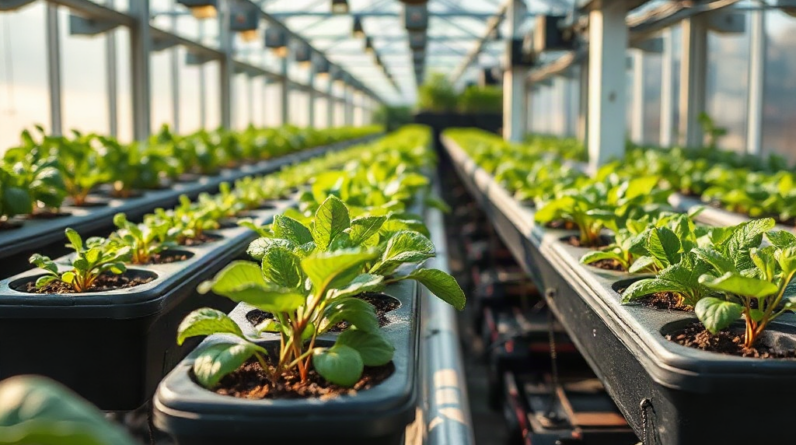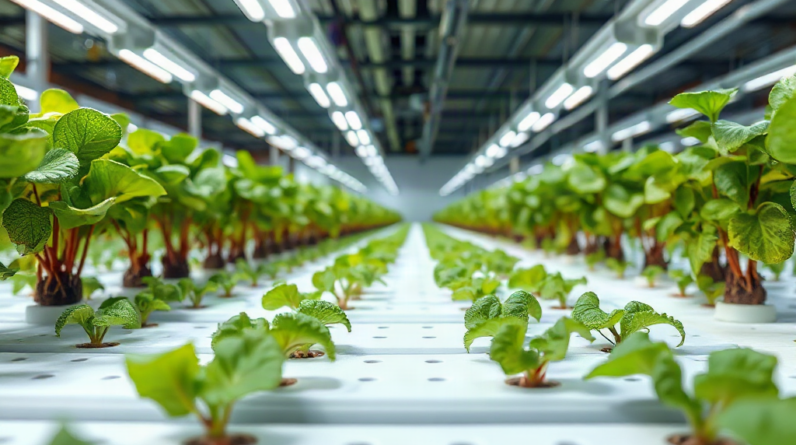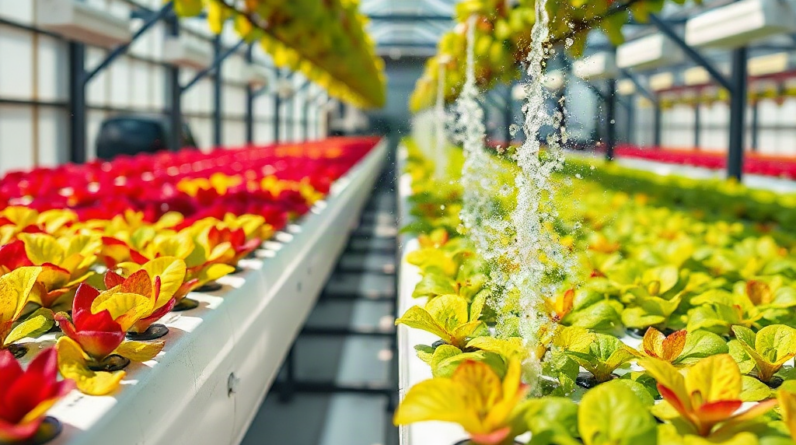
Kratky versus active hydroponic systems is primarily a choice between passive simplicity and powered control over nutrient circulation, root oxygen, and reservoir conditions. Kratky growing suits short-cycle leafy crops when low cost, silence, and minimal equipment matter, but its fixed reservoir offers limited correction capacity as water levels and nutrient strength change. Active systems use pumps or aeration to support larger plants, repeat harvests, and denser plantings, although outages, clogged lines, and added maintenance create new failure points. Choose according to crop duration, reservoir volume, monitoring ability, power reliability, and how quickly you can respond when roots show stress.
How Passive and Active Root Zones Work
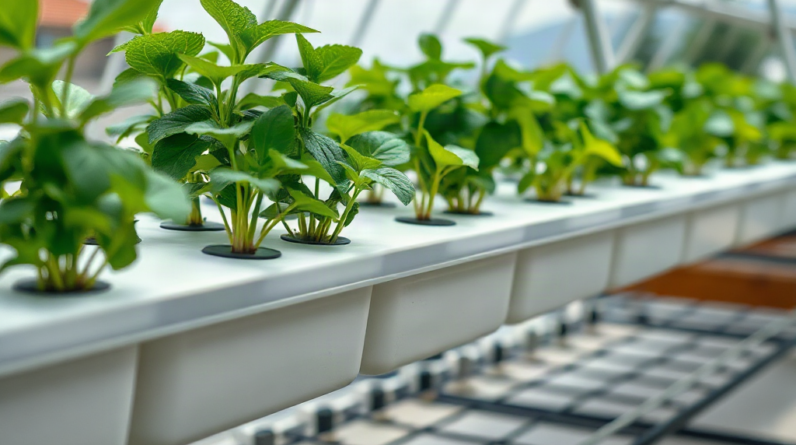
Kratky culture relies on a declining nutrient level to create two distinct root environments. A young plant begins with its roots or growing medium close enough to the solution to obtain moisture. As the plant consumes water, an air space develops beneath the lid. Upper roots exposed to this humid gap obtain oxygen, while lower roots remain in contact with the nutrient solution. The container is normally left undisturbed rather than continuously topped up to its original level.
That air gap is not unused reservoir capacity; it is part of the root-zone design. Refilling a mature Kratky container to the lid can submerge roots that adapted to air exposure and reduce their access to oxygen. A more cautious correction preserves the established gap and avoids wetting the stem or crown. The method works best when the initial solution volume is reasonably matched to the crop’s expected water use, because a container that empties too early requires intervention the original setup was meant to avoid.
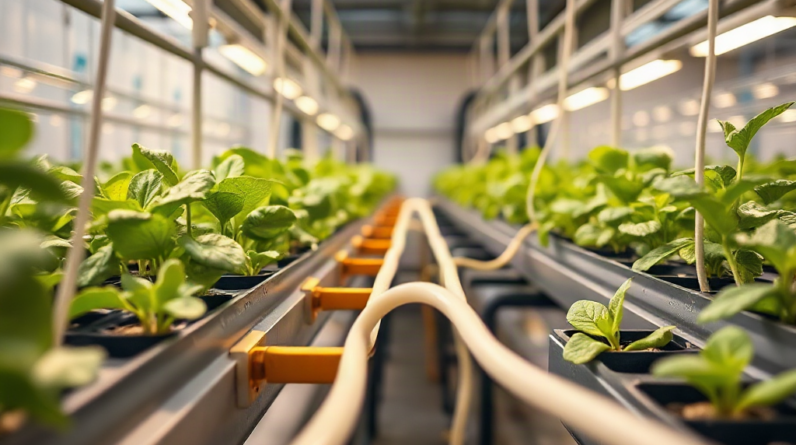
Active hydroponic systems move water, add air, or do both. Deep-water culture commonly uses an air pump and air stone. Nutrient-film systems circulate a shallow stream along channels, while drip systems deliver solution to each root zone and may recover the drainage. These configurations make oxygenation or nutrient delivery less dependent on a falling waterline. They can therefore support repeated feeding, reservoir adjustments, and longer production cycles, but only while pumps, tubing, emitters, and return paths continue to function.
The important distinction is not simply “no pump” versus “pump.” It is how each design protects roots from oxygen deprivation while supplying water and dissolved minerals. A lettuce plant in a generously sized opaque Kratky container may have enough solution and root-zone air for one compact crop. The same container is a weak match for a fruiting tomato with a long season, heavy water demand, and a large root mass. An aerated or circulating arrangement gives the grower more opportunities to replenish and rebalance the reservoir during that longer cycle.
A common mistake is treating Kratky as a sealed system that needs no observation. Leaves can still reveal wilting, edge burn, unusual paling, or stalled growth, and roots should be checked for light coloration, branching, and a neutral smell. Dark, slimy roots or a sour odor indicate that root-zone conditions are deteriorating. Active equipment does not make those checks unnecessary; it merely changes which mechanisms can be adjusted. The deeper comparison of Kratky versus active hydroponic systems begins with oxygen delivery rather than equipment count.
Crop Fit, Growth Duration, and Scale
Crop duration is often the clearest predictor of whether a passive reservoir will remain manageable. Leaf lettuce, small Asian greens, basil harvested young, and similar compact plants can fit Kratky culture because their production window and total water demand are comparatively limited. A separate container for each plant also keeps roots from competing in a shared channel and allows one plant to be removed without disturbing an entire row.
Long-lived and fruiting plants place different demands on the reservoir. Tomatoes, cucumbers, peppers, and large vining crops may consume water rapidly as foliage expands and fruit develops. Their mineral demand changes over time, roots occupy more space, and the crop may need support for months rather than weeks. A small passive vessel can move from adequate to nearly empty quickly during warm, bright weather. Adding water without checking nutrient concentration may either dilute the remaining solution or compound an already concentrated reservoir.
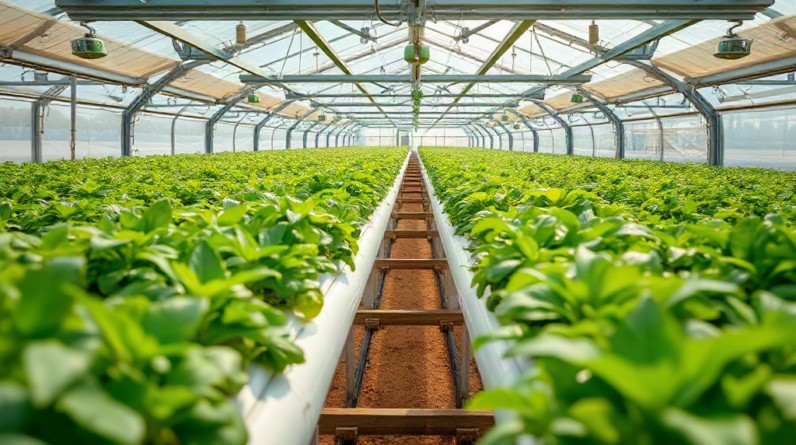
Active circulation is more useful where plants share a reservoir, production is staggered, or the crop will be harvested repeatedly. A grower can inspect one central tank, replace depleted solution, and adjust delivery across several sites. This does not mean every powered design scales gracefully. A narrow nutrient-film channel can be blocked by an oversized root mat, and a single pump failure can affect every plant connected to it. Scaling a system concentrates both control and risk.
Consider two indoor setups. Six lettuce plants intended for one harvest can each occupy a covered container sized for the full cycle. The passive arrangement stays quiet, avoids water lines, and can be spread across a shelf. By contrast, twelve basil plants intended for repeated cutting will remain in production longer and may develop uneven water use. A recirculating or aerated reservoir makes replenishment easier, although pruning, root crowding, and pump operation still require attention.
Environmental conditions can override an otherwise sensible crop choice. Warm solution holds less dissolved oxygen than cool solution, and clear containers encourage algae by admitting light. A sunny windowsill may heat a small jar sharply, while a larger opaque reservoir changes temperature more slowly. Kratky growers should therefore prioritize reservoir volume, light exclusion, and a stable location rather than choosing containers for appearance. Active growers must manage the same heat and light pressures; aeration does not compensate for excessively warm, algae-filled solution.
Match the method to the intended harvest, not merely to whether a seedling fits the opening today. Estimate how large the canopy and roots will become, how long the plant will remain, and whether the initial reservoir can cover most of its expected use. Choose active delivery when frequent replenishment, shared management, or sustained production outweighs the value of passive independence.
Cost, Labor, and Resource Tradeoffs
Kratky systems usually have a lower equipment threshold because they need no water pump, air pump, manifold, timer, or return plumbing. A practical build still requires an opaque food-compatible reservoir, a secure lid, a net cup or plant support, suitable nutrients, and enough access to inspect solution and roots. Saving money by using a translucent vessel or an unstable lid often exchanges a modest initial saving for algae, root disturbance, or spills.
Active systems add purchase costs and recurring electricity use, but their larger operational cost may be attention. Pumps must be kept clear, tubing can accumulate roots or deposits, air stones can lose output, and emitters may deliver unevenly. Recirculating water also connects plant sites biologically: a root problem or contaminant entering the shared reservoir can move throughout the loop. Cleaning and testing should be treated as part of the design rather than an optional response after flow declines.
Passive does not always mean less work over the whole crop cycle. A poorly sized Kratky container may demand improvised top-ups, repeated lifting of the lid, and emergency transfers. Several independent containers can also take longer to check than one central reservoir. Active systems reverse that tradeoff: centralized adjustment is efficient when everything is operating, but diagnosing unequal flow across many plant sites can be slower than inspecting standalone vessels.
Water use is shaped more by crop transpiration, leaks, exposed surfaces, and maintenance practices than by the presence of a pump alone. Both approaches can limit evaporation with fitted lids and covered channels. Recirculation can capture solution that would otherwise drain away, while an oversized passive container can retain enough solution for one crop without discharge. Neither format should be called resource-efficient without considering how often solution is discarded, whether leaks occur, and how much cleaning water the layout requires.
A realistic operating comparison should include the following items:
- Initial hardware: containers and supports for both methods, plus pumps, aeration, plumbing, and backup parts for active designs.
- Routine work: individual reservoir checks in Kratky culture versus flow, pump, and shared-reservoir checks in active culture.
- Power exposure: minimal for the passive root zone, but potentially immediate in systems whose roots depend on continuous flow.
- Correction capacity: limited once a small passive reservoir drifts, but broader in a central tank that can be tested and changed.
The common budgeting error is pricing the build while ignoring crop loss and response time. A grower who is away for long periods may value passive containers with no outage-sensitive pump, provided each reservoir can last through the absence. Someone who checks plants daily may prefer the control of an active reservoir. For a fuller operational comparison, use Kratky versus active hydroponic systems as a question of labor placement: passive systems demand better sizing upfront, whereas active systems demand dependable operation afterward.
Failure Risks and a Practical Selection Test
Each method fails on a different timeline. Kratky problems often develop as reservoir volume falls, nutrient concentration changes, solution warms, or the root air gap is accidentally removed. Active failures can be abrupt: a stopped pump, blocked emitter, disconnected tube, or dry reservoir may interrupt water delivery across several plants at once. The faster roots dry in a particular design, the shorter the safe response window.
Start troubleshooting by observing the mechanism rather than automatically adding nutrients. In a passive container, confirm that some lower roots still reach solution and that the upper root zone remains humid but not flooded. Check for light entering the reservoir, unexpectedly high solution temperature, and roots with slime or odor. In an active setup, verify actual water or air output at the plant sites; pump noise alone does not prove adequate delivery. Inspect intake screens, kinks, channel slope, return flow, and reservoir level before changing the formula.
A plant that wilts despite a wet root zone may be experiencing oxygen stress rather than thirst. Raising the Kratky solution to cover more roots can worsen that condition. Likewise, increasing pump output is not a universal fix in a circulating system: excess flow can overflow channels, disturb young roots, or drain a reservoir if a fitting fails. Corrective action should follow the observed failure point.
Use a short selection test before purchasing or building equipment:
- Define the crop cycle. Note expected plant size, harvest pattern, and whether the crop will remain for weeks or months.
- Estimate unattended time. Compare likely water use with passive reservoir volume, or assess how long an active root zone can tolerate an outage.
- Assess the environment. Identify heat exposure, available space, noise limits, spill consequences, and access to reliable electricity.
- Choose the failure you can manage. Decide whether individual reservoir drift or shared mechanical failure is easier for you to detect and correct.
- Test at small scale. Run one crop cycle, record water-level changes, inspect roots, and expand only after the setup behaves predictably.
Signs of a suitable setup include steady new growth, roots that remain firm rather than slimy, predictable reservoir decline, and no recurring need for emergency corrections. Warning signs include rapid swings in water level, chronic algae, repeated pump blockage, uneven growth among connected sites, or a passive container that requires frequent refilling. Those patterns show a mismatch among crop, vessel, environment, and maintenance capacity—not merely bad luck.
A hybrid approach is often sensible. Passive containers can handle small leafy crops while an aerated reservoir supports larger or longer-lived plants. This avoids forcing every crop into one architecture and limits the reach of a single failure. The best choice in Kratky versus active hydroponic systems is the one whose routine checks and likely breakdowns fit the grower’s actual schedule.
Frequently Asked Questions
Is Kratky hydroponics completely maintenance-free?
No. It removes pumps and routine circulation tasks, but plants, roots, reservoir temperature, light exclusion, water level, and nutrient condition still need periodic inspection.
Should a Kratky reservoir be refilled to the top?
Not after a mature root air gap has formed. Fully raising the solution can submerge air-adapted roots; any replenishment should preserve adequate space beneath the lid.
Which crops are easiest for a first Kratky setup?
Compact, short-cycle leafy crops such as lettuce and small greens are generally easier than large fruiting plants because their water demand and production period are more predictable.
Do active hydroponic systems grow plants faster?
Not automatically. Reliable oxygenation and nutrient delivery can support vigorous growth, but crop genetics, light, temperature, root health, spacing, and solution management still limit performance.
What backup does an active system need?
Keep replacement tubing or fittings and a suitable spare pump where an outage would quickly stress roots. Test the response plan rather than assuming equipment will provide warning before failing.
Conclusion
A sound decision starts with the crop’s full life cycle and the root zone’s oxygen needs. Kratky culture is well suited to compact crops when an opaque, adequately sized reservoir can carry them through most of one harvest. Powered aeration or circulation earns its added complexity when plants need ongoing replenishment, share a reservoir, or remain productive for longer periods.
Before scaling up, compare heat exposure, power reliability, noise, inspection time, and the consequences of a single failure. Build one representative plant site, watch how quickly its water level changes, and inspect root condition throughout the cycle. If repeated top-ups, algae, uneven delivery, or emergency interventions become normal, revise the reservoir size or system type rather than treating those symptoms as unavoidable hydroponic maintenance.
Further Reading
Authoritative Sources
- Kratky vs DWC: Which Passive System Should You Choose?
growwithhydroponics.comKratky vs DWC compared: how oxygen reaches the roots, best crops for each, and a 5-question checklist to pick the right one for your space.
- Hydroponic Systems 101: Which One is Right for Your ...
vegbed.comRisk of Pump Failure: If the pump fails, the roots can quickly dry out, leading to crop loss. Cost-Effective: Relatively inexpensive to set up ...
- NFT vs DWC vs Kratky: which should a beginner pick?
urbanharvestlab.comKratky is passive and cheapest, Efficient for many plants, but more parts to manage and more vulnerable to a pump failure. Record build cost, ...
- Hydroponics: current trends in sustainable crop production
pmc.ncbi.nlm.nih.govResearch has shown that hydroponic systems accurately regulate growth conditions, leading to increased plant growth rates and greater crop yields than ...