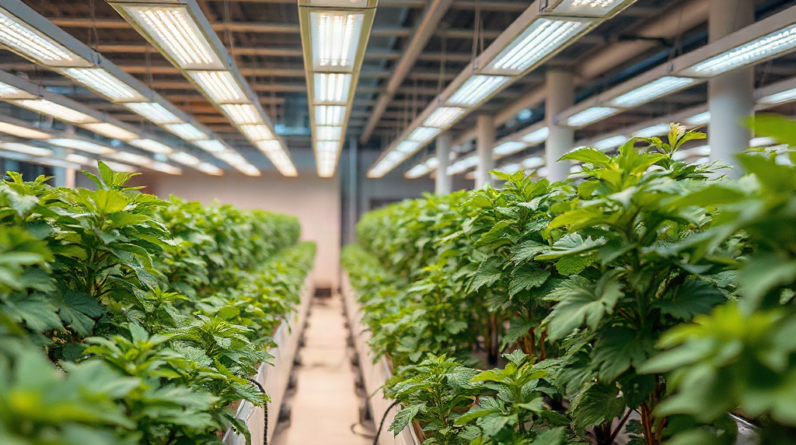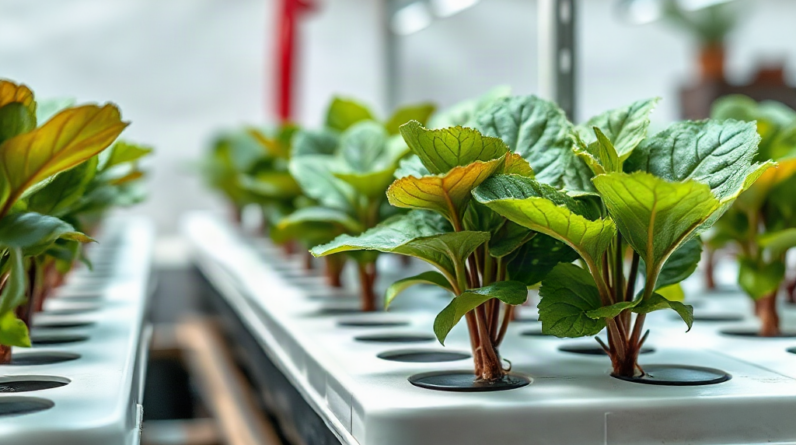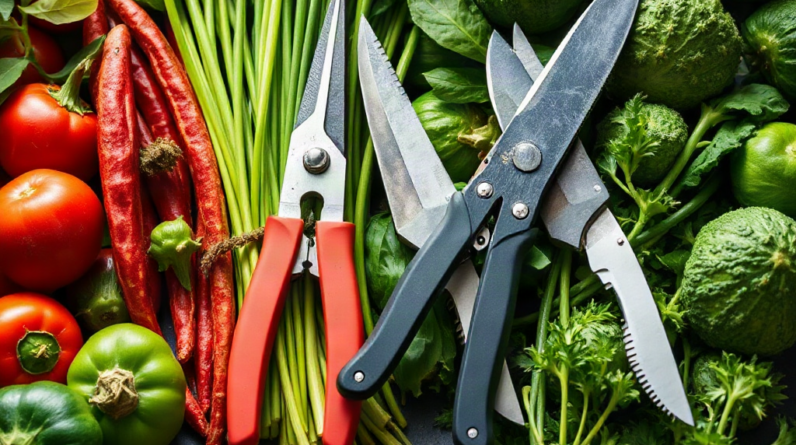
For hydroponic vegetable harvests, fine-tip snips offer the best control for herbs and tender greens, bypass pruners handle thick stems cleanly, and serrated knives are most efficient for cutting whole lettuce heads or dense root mats. Blade geometry matters because crushed stems, torn leaves, and repeated handling can shorten postharvest quality and slow the harvest. Choose stainless or corrosion-resistant blades that can be cleaned between crop batches, then match handle size and spring resistance to the user. A small operation usually needs sharp snips, bypass pruners, a dedicated harvest knife, washable containers, and a blade-cleaning routine rather than a large collection of specialized tools.
Snips, Pruners, Knives, and Scissors Compared
Harvest tools differ most in blade shape, cutting action, and the amount of control they provide around crowded foliage. Fine-tip snips use short, narrow blades that fit between leaves and petioles without disturbing nearby growth. They are well suited to basil tips, individual kale leaves, chard petioles, and selective lettuce harvesting. Their weakness is limited leverage: forcing them through a fibrous pepper or tomato stem can twist the plant, damage the pivot, or leave a ragged cut.
Bypass pruners move one sharpened blade past a thicker supporting blade. That slicing action is preferable to an anvil design for living vegetable stems because it concentrates less crushing force at the cut. Compact bypass pruners handle tomato trusses, mature cucumber stems, pepper branches, and woody basil plants more comfortably than light snips. Full-size models may be excessive inside a dense indoor canopy, however, where bulky jaws can catch leaves or sever an adjacent stem.
Harvest knives are faster when an entire plant must be removed in one motion. A short straight or gently curved blade can cut a lettuce head at its base while keeping the grow channel undisturbed. Serrations help with dense, wet, or fibrous tissue, but their teeth may trap plant residue and are slower to sharpen. A smooth blade is easier to clean and maintain, although it needs a sharp edge to avoid sawing through the crown. Knives also expose more blade than snips, so a sheath and a deliberate cutting direction are sensible requirements.
General-purpose kitchen or office scissors may look adequate for a small garden, but their broad tips and loose pivots often reduce precision. Handles not intended for wet work may retain residue, while carbon-steel blades can stain or corrode after repeated contact with nutrient solution. Dedicated produce shears are a better alternative when their blades separate for cleaning and their handle joints have few crevices.
A useful comparison should therefore focus on the cut rather than the tool name. Snips favor access and precision, pruners favor leverage, and knives favor speed across repeated whole-plant cuts. The most common purchasing mistake is choosing one heavy tool for every crop. A compact two- or three-tool set usually causes less tissue damage and requires less hand force than an oversized universal cutter. Readers comparing specific models can use this hydroponic harvest tool comparison as a basis for checking blade length, pivot quality, and cleaning access.
Matching the Tool to the Vegetable
Crop structure should determine the cutting tool before price or appearance does. Tender herbs and baby greens need accuracy more than power. Fine snips with narrow tips let the user cut basil above a node, remove parsley stems near the crown, or take outer lettuce leaves without bruising marketable tissue. A long blade may complete more cutting per stroke, but it is harder to position when stems overlap beneath a light fixture or beside irrigation tubing.
Head lettuce calls for a different approach. At harvest, the grow site may contain a compact crown, lower wrapper leaves, roots, and a net cup in a small area. A short harvest knife can separate the head close to its base without cutting into the cup. If the production method requires root removal after the head is taken, sturdy shears or a separate knife should be used for the root mass. Using the clean produce blade on roots transfers nutrient film and trapped debris back to the edible portion, and root fibers can dull a fine edge quickly.
Fruiting crops place more load on the cut. Tomato trusses and mature pepper stems are better handled with compact bypass pruners because the supported slicing motion limits stem splitting. Cucumbers may be cut with snips while young, but thicker peduncles can require pruners later in the cycle. Pulling or twisting fruit is a weak substitute: the fruit may detach successfully, yet the motion can tear vines, loosen clips, or disturb roots in lightweight channels.
Consider a mixed shelf growing basil, loose-leaf lettuce, and dwarf peppers. Fine snips can handle the first two crops during selective harvest, while small bypass pruners remain at the pepper row. A knife adds value only if lettuce is harvested as complete heads. This allocation is more efficient than carrying every tool through every zone, and it reduces the chance that a root-cutting blade will be used on ready-to-pack leaves.
Use a brief crop test before committing to multiple tools:
- Check access: Can the blade reach the intended stem without contacting another leaf or support?
- Inspect one cut: Look for compression, stringy fibers, tearing, or a split extending below the cut.
- Measure effort: The tool should complete the cut without wrist twisting or two-handed force.
- Review the harvested item: Watch for punctures, bruised leaf margins, and excessive sap transfer.
A successful match produces a clean cut with little plant movement and consistent placement across repeated harvests. If stems bend before separating, the blade may be dull, the tool may lack leverage, or the crop may need a different blade style. Tool choice should be reconsidered as plants mature because a cutter that works on young growth may struggle with late-cycle stems.
Cut Quality, Sanitation, and Worker Comfort
Sharpness affects both produce quality and the force transmitted into the growing system. A sharp blade shears tissue with a short, controlled motion. A dull edge compresses the stem first, encouraging the operator to squeeze harder, saw repeatedly, or pull the crop toward the blade. Those compensating movements can bruise leaves, shake neighboring plants, and turn a quick cut into several points of contact.
Sanitation depends on tool design as much as cleaning frequency. Sap, leaf fragments, and nutrient residue collect around pivots, serrations, springs, and textured handles. Tools with accessible joints, corrosion-resistant blades, and smooth handle surfaces are easier to clean thoroughly than cutters with enclosed channels that remain wet. Stainless steel is commonly selected for wet growing environments because it resists corrosion, but the label does not make a tool maintenance-free. Blades should still be cleaned, dried, inspected, and stored away from reservoir splash.
Keep produce-cutting tools separate from equipment used on roots, support twine, packaging, or diseased plant material. Color-coded handles or labeled storage positions make that separation visible. If a suspicious plant is removed, the cutter should leave the harvest sequence for cleaning rather than moving immediately to healthy plants. A common failure is wiping visible sap from a blade and assuming the pivot and handle are equally clean. Residue hidden at the joint can return to the blade during the next series of cuts.
Cleaning products and contact times should follow their labels and suit the tool material and food-handling context. Mixing cleaning chemicals or guessing at stronger concentrations is not a sound shortcut. Before harvest resumes, check that no cleaner remains where it could contact produce. Replace tools with deep rust, cracked handles, loose pivots that cannot be adjusted, or damaged coatings; surface defects create additional places for moisture and residue to remain.
Ergonomics becomes noticeable long before a tool wears out. Spring-loaded snips reopen automatically and can speed repetitive herb work, but a stiff spring increases fatigue. Handle span matters for smaller hands, while hard finger loops may create pressure during long sessions. Left-handed users should verify that the blade orientation and lock remain practical in the left hand. A wrist-neutral grip, light tool weight, and a lock that can be operated without touching the blade are more valuable than decorative handle features.
Test comfort under realistic conditions rather than making a few dry cuts. Gloves, wet handles, dense foliage, and repeated overhead reaches alter control. Stop using a tool if the lock slips, the handles become slick, or the cut line cannot be seen. The comparison in Hydroponic vegetable harvest tools compared is most useful when sharpness, cleanability, grip security, and repeated-use comfort are evaluated together rather than treated as separate concerns.
Building a Practical Harvest Tool Kit
A practical kit is built around recurring harvest tasks, not the number of accessories available. For a small mixed hydroponic garden, begin with fine-tip snips for selective leaf and herb cuts, compact bypass pruners for thicker stems, and a short knife only when whole heads or dense bases are routinely removed. Add washable collection containers, a blade-safe cleaning setup, a drying area, and protective storage. These supporting items often influence cleanliness and workflow more than buying another cutter.
Blade quality deserves more attention than added mechanisms. The cutting edges should meet evenly, the pivot should move without side-to-side wobble, and the lock should stay clear of the hand during use. Replaceable blades can extend the service life of a comfortable handle, although replacements must be readily obtainable to offer practical value. A tool that can be sharpened may cost more initially but can outperform disposable scissors through repeated crop cycles. Conversely, sharpening a badly aligned or deeply nicked blade will not correct the underlying problem.
Budget decisions should reflect harvest volume. Someone collecting a few salad leaves twice a week may need only one washable pair of quality snips. A grower cutting dozens of lettuce heads in a session benefits more from a comfortable knife, a sheath, a spare sanitized blade, and an organized handoff to harvest containers. Buying professional-size pruners for tender greens adds weight without useful capacity. Buying fragile micro-snips for mature tomato clusters creates the opposite mismatch.
Organize the harvest sequence before the first cut. Prepare clean containers, inspect and clean the tools, identify any plants that should be handled separately, and remove obstructions from the work area. Harvest edible portions with their assigned cutters, then move to root trimming or system cleanup with separate equipment. Afterward, remove visible plant material, complete the chosen cleaning procedure, dry each tool, and inspect the edge and pivot before storage. Signs that the workflow is working include uniform cuts, less crop handling, tools returning to assigned locations, and no wet cutters left closed in a drawer.
Extra tools become justified when they remove a repeatable bottleneck. A second set may prevent delays while another set is being cleaned, while curved blades may improve access in a particular vertical rack. Specialization is wasteful when it merely duplicates a tool already making clean cuts comfortably. Keep a simple record of which cutter is used for each crop and why it is replaced. Frequent sharpening may signal abrasive root cutting, while repeated pivot loosening may indicate that a light tool is being forced through stems beyond its capacity.
The final buying check is straightforward: make sample cuts on the thickest and most delicate crops expected, examine how completely the tool can be cleaned, and confirm that the grip remains controlled when damp. That process gives the broader Hydroponic vegetable harvest tools compared decision a crop-specific result rather than a generic ranking.
Frequently Asked Questions
What is the best tool for harvesting hydroponic lettuce?
Use fine snips for individual outer leaves and a short, sharp harvest knife for complete heads. Keep any tool used to cut roots separate from the blade that contacts edible leaves.
Are bypass pruners necessary for hydroponic vegetables?
They are useful for tomatoes, peppers, mature cucumbers, and other thick or fibrous stems. Tender herbs and leafy greens usually need the greater precision of small snips instead.
Can kitchen scissors be used for hydroponic harvesting?
They can handle occasional cuts if they are sharp, corrosion-resistant, and reserved for clean produce. Broad tips, difficult-to-clean pivots, or loose blades make them less suitable for repeated harvesting.
How often should harvest blades be sharpened?
Sharpen or replace a blade when stems bend, cuts show crushed fibers, or extra hand pressure becomes necessary. Cutting roots, twine, or hard supports will dull an edge faster than cutting tender stems.
Should one tool be used for every crop?
No. A fine cutter forced through thick stems damages both the blade and the crop, while large pruners reduce control around delicate leaves. Match precision tools to greens and leverage tools to fruiting crops.
Conclusion
Choose harvest tools by stem structure, access, cleaning requirements, and repeated-use comfort. Fine-tip snips cover selective herb and leafy-green work, compact bypass pruners provide controlled leverage for fruiting crops, and a short knife earns its place when whole heads are cut regularly. Keep produce blades away from roots and general system maintenance, since those tasks add residue and dull fine edges.
Before expanding the kit, test each cutter on both the most delicate and thickest material it will encounter. Inspect the cut, note the hand force required, and confirm that the pivot and handle can be cleaned and dried completely. Replace damaged tools rather than compensating with harder squeezing or repeated sawing. A small, assigned, well-maintained set will usually deliver cleaner work than a crowded drawer of cutters with overlapping purposes.
Related Content
- Hydrogen Peroxide for Hydroponic System Cleaning: Concentration, Contact Time, and Rinse Steps
- The Simple Way to Cultivate Fresh Herbs
- Grow Hydroponically Without Sunlight: Effective Techniques for Indoor Cultivation
- 10 Effective small space hydroponics strategies for 2025 success
- Grow Room Hydroponics: Essential Equipment and Setup Steps for Optimal Plant Growth